The Baader-Meinhof Phenomenon: Why You See It Everywhere (2026)

On this page (6)
You learn a new word on a Tuesday. By Friday you have heard it three times, seen it in an article, and spotted it on a poster. It feels uncanny, like the universe suddenly decided to put this word everywhere the moment you learned it. Or you buy a particular car, and overnight the roads seem full of the same model, as if everyone copied you at once.
They did not, and the universe did not conspire. The word and the car were always there in exactly the same numbers. What changed was you. This is the Baader-Meinhof phenomenon, and it is one of the most common little illusions your mind produces, a quiet demonstration of how much your experience of reality is shaped by attention and memory rather than by the world itself.
What the Baader-Meinhof Phenomenon Is
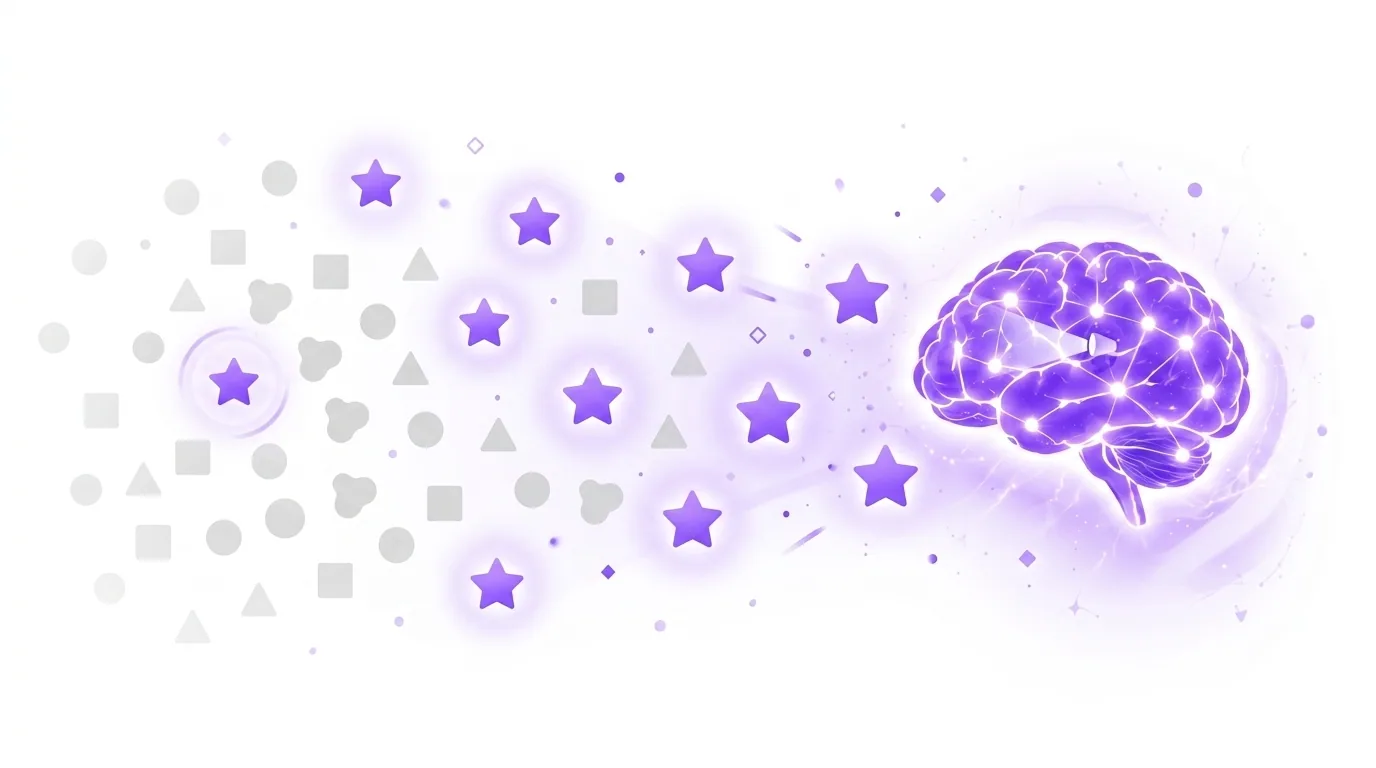
The Baader-Meinhof phenomenon, known more precisely as the frequency illusion, is the experience of noticing something for the first time and then suddenly seeming to encounter it everywhere. The crucial word is seeming. The thing is not appearing more often. You are noticing it more often, and your mind mistakes the increase in your noticing for an increase in the thing itself.
The name has an odd origin. In 1994, a man named Terry Mullen wrote to a newspaper describing how, after hearing about the Baader-Meinhof militant group for the first time, he kept coming across mentions of it. The quirky name stuck. Later, in 2005, the linguist Arnold Zwicky gave it the more descriptive academic label it deserves: the frequency illusion.
And an illusion is exactly what it is. Nothing in the outside world has changed. The shift is entirely inside your own head, and it is built from two well-understood mental processes working together.
The Two Forces Behind the Illusion
The frequency illusion is not a single glitch. It is what happens when two everyday features of your mind combine.
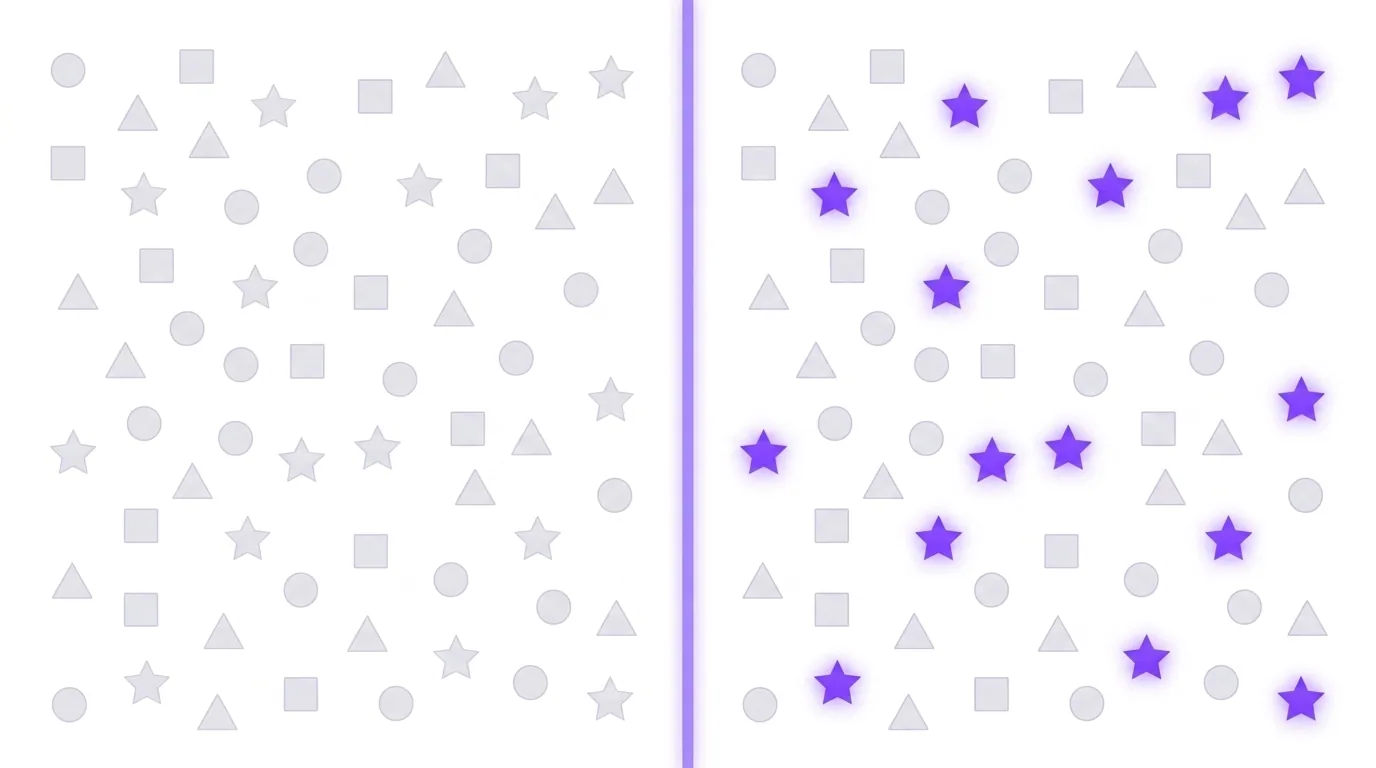
Selective attention. Your brain is flooded with far more information than it could ever consciously process, so it filters ruthlessly, letting most of the world pass by unnoticed while it spotlights what seems relevant. The instant something becomes newly important to you, a word you just learned, a car you just bought, your brain quietly adds it to the list of things worth flagging. From that moment, instances that would previously have been filtered out and ignored now get through to your awareness. You are not seeing more of the thing. You are filtering out less of it.
Confirmation bias. Once you have the impression that something is suddenly everywhere, your mind starts gathering evidence for that impression and ignoring evidence against it. Each new sighting feels like a striking confirmation ("there it is again!"), while all the times it did not appear go completely uncounted. Your brain is keeping a tally of the hits and quietly discarding the misses, which makes the pattern look far stronger than it is.
Put those two together and the illusion is complete. Selective attention makes you start noticing the thing, and confirmation bias convinces you the noticing reflects a real surge in the world. A close cousin, the recency illusion, adds the final touch: because you only just started noticing it, you assume it must be new or rare, when often it was there in the background all along.
Why It Is Really a Story About Memory and Attention
Here is what makes this more than a curiosity. The frequency illusion is a clean, everyday demonstration of a much bigger truth: you do not experience the world directly. You experience a filtered, attention-shaped, memory-tallied version of it.
Attention decides what gets in. Of the millions of sights and sounds around you at any moment, only the tiny fraction your attention selects ever reaches awareness, and an even tinier fraction gets encoded into memory. What you attend to is very nearly the entire story of what you will later remember. This is the same principle that runs through everything from why you forget things moments after seeing them to how well you learn: attention is the gateway, and almost nothing gets through it that you did not, on some level, select.
Memory then does the counting, and it counts badly. It over-weights the vivid, recent, and emotionally salient hits, and it silently drops the ordinary non-events. That is why the handful of times you spotted your new word feel like a flood, while the thousands of moments it was absent leave no trace. The frequency illusion is your attention and memory systems doing exactly what they always do, just in a case where you can catch them in the act.
Everyday Examples You Have Almost Certainly Felt
Once you know the pattern, you see it (fittingly) everywhere:
- You decide on a baby name, and suddenly every third child seems to have it.
- You take an interest in a band, and they start getting mentioned on every podcast you play.
- You notice a particular number, and it begins turning up on receipts, clocks, and door numbers.
- You research a health symptom, and references to it appear across everything you read.
In every case the base rate never moved. Babies with that name, mentions of that band, appearances of that number were happening at the same rate before you cared. Your filter simply opened, and your memory started keeping score.
Why Your Brain Works This Way
If the frequency illusion produces a false impression, why is your brain built to create it? Because the underlying machinery is not a bug; it is one of the most useful things your mind does.
You cannot possibly attend to everything. A brain that treated every input as equally important would be paralysed, drowning in irrelevant detail. So it prioritises, and one of its best rules of thumb is to prioritise what has recently become relevant to you. The thing you just learned, bought, or worried about is, statistically, more likely to matter again soon, so flagging it is efficient. The frequency illusion is the harmless side effect of a filtering system that mostly serves you extremely well, keeping your limited attention pointed at what matters and freeing you from the impossible task of noticing everything at once.
The Takeaway: You See What You Attend To
The next time something seems to appear everywhere the moment you noticed it, you can enjoy the feeling while knowing the truth. The world did not change. Your filter did. You simply switched on your attention to something that was always quietly present, and your memory did the rest by counting the hits and forgetting the misses.
There is a genuinely useful lesson buried in the illusion. Because attention determines what you notice and, in turn, what you remember, deciding what to pay attention to is one of the most powerful things you can do for your memory. What you deliberately attend to is what you encode; what you let your filter ignore is gone. That control over attention is not fixed, either. It is a skill that sharpens with practice, and it sits underneath every kind of memory you have.
If catching your own mind in the act made you curious about how well your attention and recall actually perform, our free memory test takes about two minutes, and a few focused minutes a day with a memory game trains exactly the attention and encoding that decide what you notice, what you remember, and what quietly slips past unseen.
Frequently asked questions
What is the Baader-Meinhof phenomenon?
What causes the frequency illusion?
Why is it called the Baader-Meinhof phenomenon?
Is the Baader-Meinhof phenomenon real or a real increase?
What does the frequency illusion reveal about memory?
Train your memory. Play Blanked free.
A free visual memory game built around how memory actually works. 6 game modes, 400+ levels.
Download on the App Store