Flashbulb Memories: Why You Remember Exactly Where You Were (2026)

On this page (5)
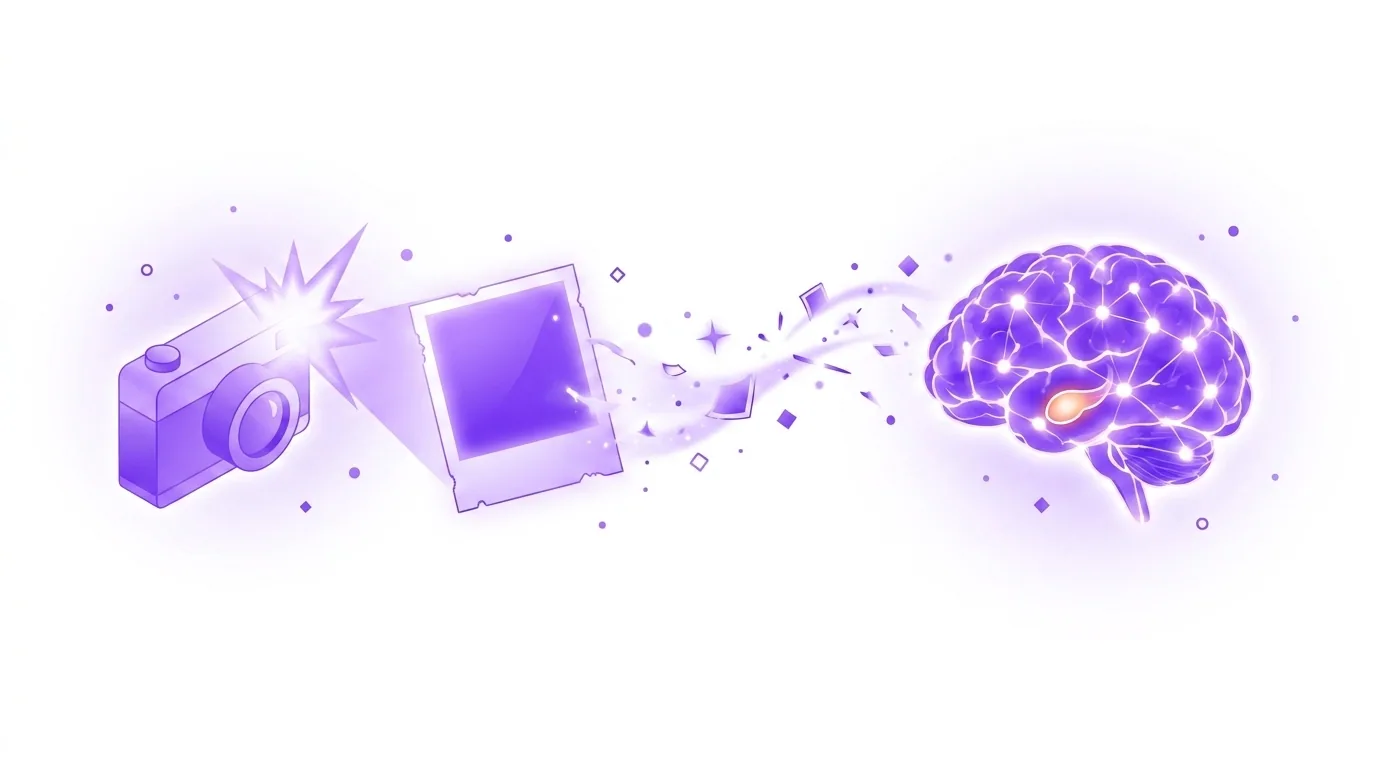
Ask anyone who was alive for it where they were when they heard about a great public shock, a national tragedy, the death of someone famous, the news that changed everything. They will not just tell you. They will tell you the room, the light, who spoke the words, what they were holding, the strange small detail that has no business surviving decades. The memory comes back not as a faded summary but as a scene, sharp and complete, as if a camera had gone off in their mind and frozen the moment forever.
These are flashbulb memories, and they are among the most vivid, confident recollections a human being ever forms. They feel more like photographs than memories. But here is the twist that decades of research has uncovered, and it is genuinely unsettling: those crisp, certain, photographic memories are often wrong. What flashbulb memories teach us about the mind is not that memory can be perfect. It is almost the opposite.
What a Flashbulb Memory Is
A flashbulb memory is a vivid, detailed, and highly confident memory of the moment you learned about a shocking, emotionally charged, and consequential event. The term was coined in 1977 by psychologists Roger Brown and James Kulik, who studied how people recalled hearing about the assassination of John F. Kennedy. They found that people remembered not just the news but the entire personal scene around it: where they were, what they were doing, who told them, the weather, tiny irrelevant details, all preserved with startling clarity years later.
The name captures the feeling exactly. It is as if, at the instant of shock, the mind fires a flash and captures a complete photograph of the moment. Brown and Kulik proposed that surprise and emotional intensity trigger a special mechanism that records the scene in unusual, permanent detail.
For a while, that photographic idea was widely believed. Then researchers did something simple and devastating: instead of just asking people how vivid their memories felt, they checked whether they were actually true.
The Discovery That Changed Everything
The problem with studying flashbulb memories is obvious once you see it. You cannot know a shocking event is coming, so you cannot record what someone's memory was like at the moment it formed. But you can catch people right after a shock, write down what they say, and then come back years later to compare.
In 1986, the morning after the Challenger space shuttle disaster, psychologists Ulric Neisser and Nicole Harsch had students write down exactly how they heard the news. Two and a half years later, they asked the same students to recall that morning again. The memories were vivid, detailed, and delivered with high confidence. They were also, in many cases, completely wrong. Students confidently described hearing the news in places they had not been, from people who had not told them, doing things they had not done. Some, shown their own handwritten account from the day after, insisted the original must be mistaken, because their current memory felt so much more real.
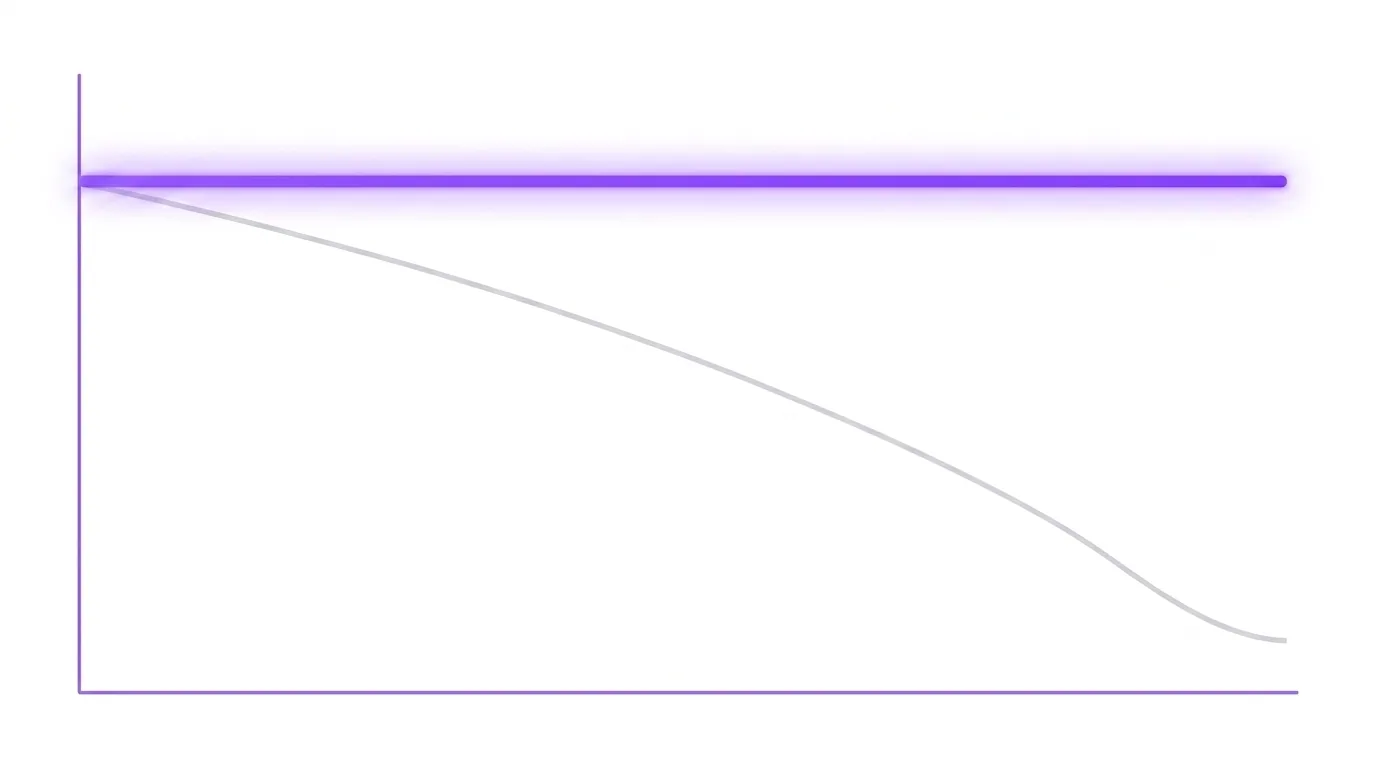
Later research on memories of major public tragedies confirmed the pattern at scale. The crucial finding, from work by Jennifer Talarico and David Rubin, is that flashbulb memories are not more accurate than ordinary memories. Over time they decay and distort at a similar rate to a normal memory of an ordinary day. What sets them apart is not accuracy at all. It is confidence and vividness, which stay sky-high even as the accuracy quietly crumbles.
The Confidence Trap
This is the heart of what flashbulb memories reveal, and it is one of the most important and counterintuitive facts about human memory: confidence is not evidence of accuracy.
With an ordinary memory, low vividness gives you a natural humility. You are aware it is fuzzy, so you hold it loosely. A flashbulb memory removes that safety check. It feels so vivid and complete that you are certain it must be true, and that certainty does not fade even as the details drift. You end up maximally confident in a memory that may have significantly rewritten itself. The feeling of remembering and the accuracy of remembering have come apart completely.
This is not a minor curiosity. It is the same dissociation that makes confident eyewitness testimony so dangerous in courtrooms, and it is the same reconstructive machinery behind shared false memories like the Mandela effect. Flashbulb memories are simply the most dramatic demonstration of it, because they pair the highest possible confidence with ordinary, fallible accuracy.
Why the Brain Makes Them So Vivid
If flashbulb memories are not more accurate, why are they so much more vivid and durable in feel? Two forces combine.
Emotion at the moment of encoding. A shocking event floods the brain with stress and emotion, and the amygdala, the structure that tags experiences with emotional significance, goes into overdrive. Brain imaging of people recalling major-tragedy memories shows heightened amygdala involvement, especially in those who were close to the event. That emotional charge is laid down alongside the memory and gives it its permanent sense of intensity. This is the same emotional tagging that makes embarrassing moments impossible to shake.
Relentless rehearsal. This is the part people miss. After a major shock, you do not just store the memory and leave it. You tell the story, again and again. You discuss it, you see it covered everywhere, you replay it. Each retelling strengthens the feeling of vividness, but it also quietly reshapes the memory, folding in details you heard later, smoothing it into a better story. The rehearsal that makes a flashbulb memory feel so real is also, ironically, part of what makes it drift from the truth.
Vividness plus confidence, built by emotion and rehearsal, with no matching guarantee of accuracy: that is a flashbulb memory in a sentence.
What This Means for Trusting Your Own Memory
The lesson is not that your memory is worthless. Most of what you remember is reliable enough, and flashbulb memories are usually broadly correct about the big facts even when the personal details wander. The lesson is subtler and more useful: how a memory feels tells you almost nothing about how accurate it is.
The most vivid, certain, emotionally charged memory you own could be significantly wrong, and you would have no way of knowing from the inside. That is worth holding gently, especially in the moments when your certainty is highest and someone else remembers it differently. Neither of you is lying. Memory is reconstruction, and vividness is not proof.
It also underlines something encouraging about the memory you can actually control. The parts of memory that improve with practice, deliberate attention, careful encoding, and genuine recall rather than the passive feeling of vividness, are exactly the parts worth training. A flashbulb memory is your brain on autopilot, high on emotion and rehearsal. Deliberate memory is the opposite: quiet, attentive, and honest about its limits.
If flashbulb memories made you curious about how your own recall actually performs, rather than how confident it feels, our free memory test is a two-minute, measurable check, and a few focused minutes a day with a visual memory game trains the deliberate encoding and retrieval that real accuracy depends on.
The next time a memory arrives with a flash, complete and certain and cinematic, you can appreciate it for the extraordinary thing it is: your emotional brain, doing its most dramatic work. Just remember that the flash lit up how the moment felt, not necessarily how it happened.
Frequently asked questions
What is a flashbulb memory?
Are flashbulb memories accurate?
Why do I remember exactly where I was when I heard shocking news?
What did the Challenger study show about flashbulb memories?
What do flashbulb memories teach us about memory?
Train your memory. Play Blanked free.
A free visual memory game built around how memory actually works. 6 game modes, 400+ levels.
Download on the App Store