Foods That Boost Memory (And 5 That Hurt It) | 2026

On this page (16)
Your brain accounts for roughly 2% of your body weight but consumes about 20% of your daily energy. It’s the most metabolically expensive organ you have. And the fuel you give it directly affects how well it forms memories, retrieves information, and maintains its structure over time.
This isn’t vague wellness talk. Research from Harvard, Mayo Clinic, and Mass General Brigham consistently shows that specific nutrients support brain function while others actively damage it. A 2025 review published in the journal Nutrients found that dietary patterns rich in antioxidants, omega-3 fatty acids, and polyphenols are consistently associated with better cognitive function and reduced risk of neurological decline.
Here’s what the science says about which foods help your memory, which ones hurt it, and how nutrition fits into a broader brain health strategy.
7 Foods That Genuinely Boost Memory
1. Fatty Fish
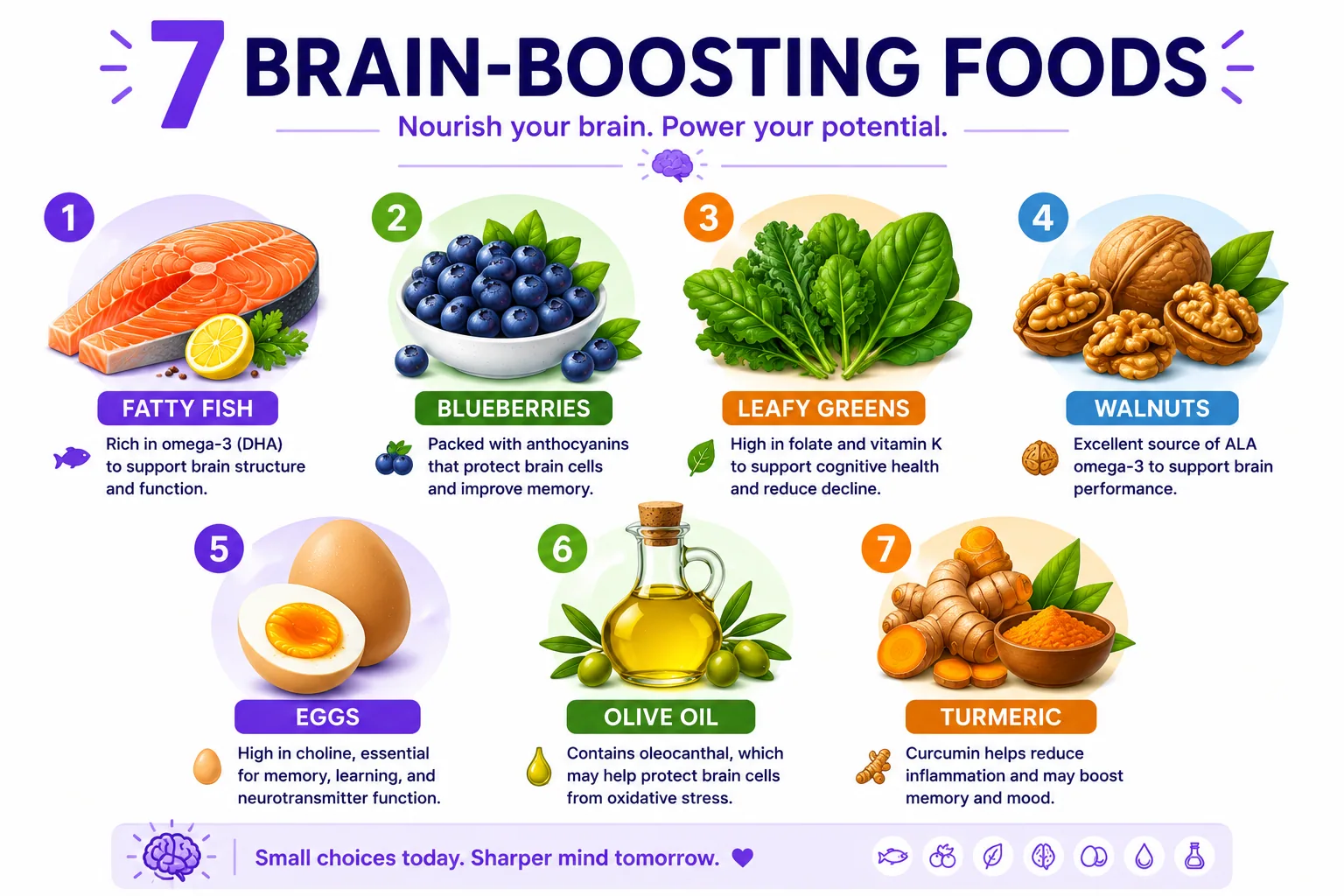
Fatty fish (salmon, mackerel, sardines, trout) is the single most frequently cited brain food in the research, and for good reason. It’s the richest dietary source of omega-3 fatty acids, particularly DHA (docosahexaenoic acid), which makes up a significant portion of the structural fat in your brain.
DHA is critical for maintaining the fluidity of cell membranes in neurons, which directly affects how efficiently signals are transmitted between brain cells. Research from Harvard has shown that higher omega-3 intake is linked to lower blood levels of beta-amyloid, the protein that forms damaging plaques in Alzheimer’s disease. A 2022 meta-analysis found that regular fish consumption was associated with a 7 to 10% reduced risk of cognitive decline.
Practical tip: Aim for two servings of fatty fish per week. If you don’t eat fish, plant-based omega-3 sources include walnuts, chia seeds, and flaxseeds, though the conversion rate to DHA is lower.
2. Blueberries
Blueberries are exceptionally rich in anthocyanins, a type of flavonoid with potent antioxidant and anti-inflammatory properties. These compounds cross the blood-brain barrier (many nutrients can’t) and accumulate in brain regions involved in learning and memory.
A 2019 study found that blueberry consumption significantly improved short-term memory and cognition, likely through reduced oxidative stress and improved signalling between neurons. Research from the Mayo Clinic Health System notes that berries more broadly are among the most effective foods for reducing age-related memory decline.
Practical tip: A handful of blueberries daily, whether fresh, frozen, or added to yoghurt or porridge. Frozen blueberries retain virtually all their nutritional value and are typically cheaper.
3. Dark Leafy Greens
Kale, spinach, broccoli, bok choy, and collard greens are rich in brain-protective nutrients including vitamin K, lutein, folate, and beta carotene. Harvard’s research on brain foods specifically highlights that these plant-based foods may help slow cognitive decline.
Folate is particularly important because it helps regulate homocysteine levels. High homocysteine is associated with brain atrophy and increased dementia risk. Leafy greens are one of the most reliable dietary sources of folate, and studies suggest that people who eat leafy greens daily show slower rates of cognitive decline than those who rarely eat them.
Practical tip: One serving of dark leafy greens per day. A handful of spinach in a smoothie, a side of broccoli with dinner, or a kale salad at lunch. Consistency matters more than quantity.
4. Walnuts
All nuts benefit brain health through their combination of healthy fats, antioxidants, and vitamin E, but walnuts stand out. A UCLA study found that higher walnut consumption was linked to improved cognitive test scores across all age groups. Walnuts are the only nut that provides a significant amount of alpha-linolenic acid (ALA), a plant-based omega-3 fatty acid.
Practical tip: A small handful (about 30g) of walnuts daily. Add them to porridge, salads, or eat them as a snack. If you’re watching fat intake, Dr Rudolph Tanzi of Mass General Brigham recommends almonds as a lower-fat alternative that still provides brain health benefits.
5. Eggs
Eggs are one of the best dietary sources of choline, a nutrient that your brain uses to produce acetylcholine, a neurotransmitter critical for memory, mood regulation, and attention. The McGill University study we’ve referenced across this blog found that brain training can increase acetylcholine production. Dietary choline provides the raw material your brain needs to make that neurotransmitter in the first place.
Eggs also provide B vitamins (particularly B6, B12, and folate), which help regulate homocysteine and support overall brain health. Most of the choline is in the yolk, so whole eggs are significantly more beneficial than egg whites alone.
Practical tip: One to two whole eggs per day. Boiled, scrambled, or poached. The choline content doesn’t change with cooking method.
6. Extra Virgin Olive Oil
Extra virgin olive oil is a cornerstone of the Mediterranean diet and contains oleocanthal, a compound that has been shown to help clear beta-amyloid plaques from the brain. It’s also rich in polyphenols, which reduce inflammation and oxidative stress in brain tissue.
A study published in the Annals of Clinical and Translational Neurology found that participants who consumed olive oil regularly had significantly better cognitive function than those who rarely consumed it. The benefits were strongest with extra virgin olive oil (which is less processed and retains more polyphenols) compared to refined olive oil.
Practical tip: Use extra virgin olive oil as your primary cooking fat and salad dressing base. One to two tablespoons daily is the amount most commonly associated with benefits in the research.
7. Turmeric
Curcumin, the active compound in turmeric, has both anti-inflammatory and antioxidant properties. Research suggests it can cross the blood-brain barrier and may help clear amyloid plaques, boost serotonin and dopamine, and promote the growth of new brain cells through increased BDNF production.
The challenge with turmeric is bioavailability. Curcumin is poorly absorbed on its own. Consuming it with black pepper (which contains piperine) increases absorption by up to 2,000%. This is why traditional Indian cooking often pairs turmeric with black pepper.
Practical tip: Add turmeric and a pinch of black pepper to scrambled eggs, soups, curries, or golden milk. Consistency matters more than quantity. A small amount daily is more effective than a large dose occasionally.
5 Foods That Quietly Wreck Your Memory
The research on foods that harm memory is just as clear as the research on foods that help. These aren’t foods that will destroy your brain overnight. They’re foods that, when consumed regularly over months and years, create conditions that impair memory formation and accelerate cognitive decline.
1. Added Sugar
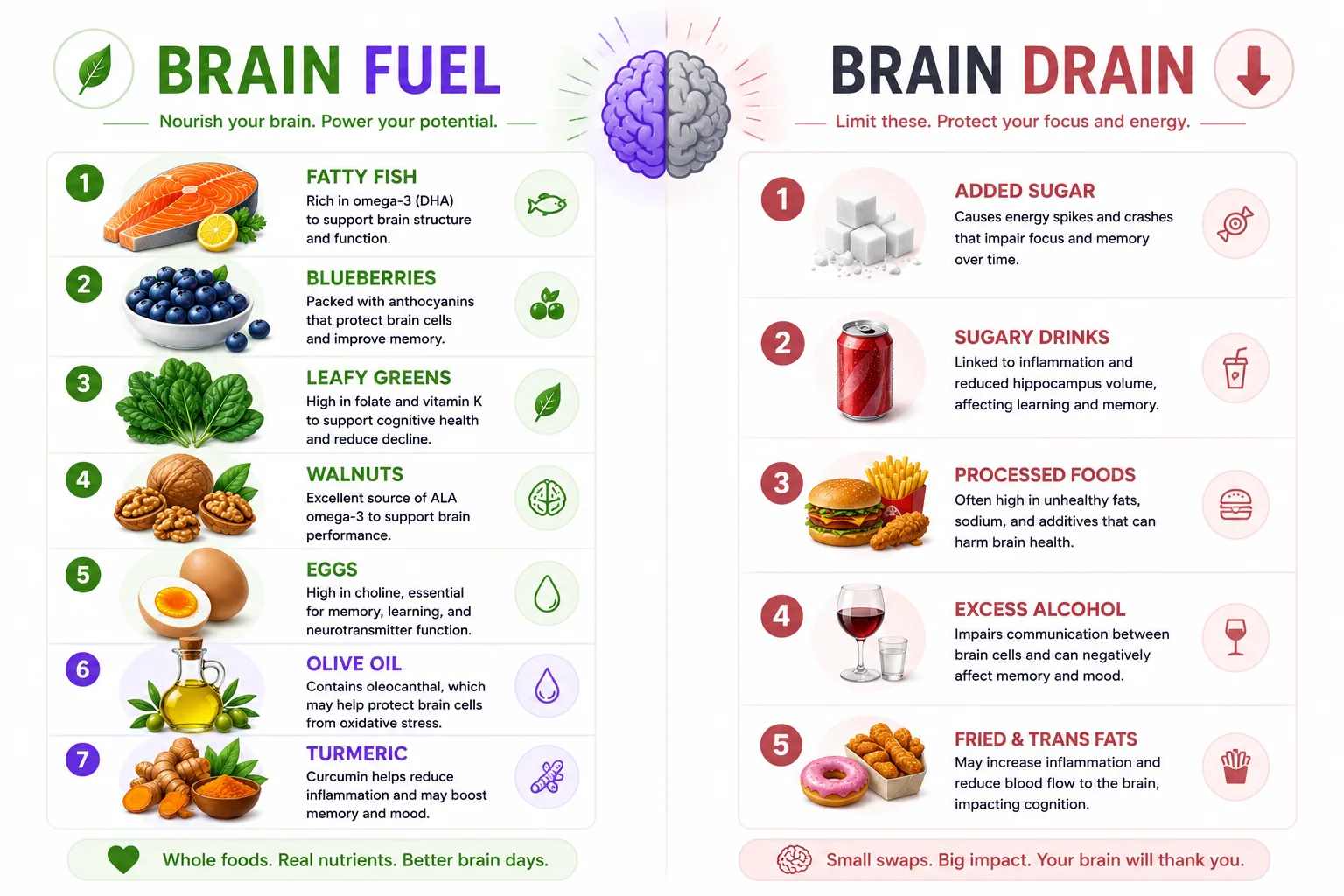
High sugar intake is one of the most consistently documented dietary threats to brain health. A 2020 review found that excessive sugar consumption impairs hippocampal function, reduces BDNF production (the protein critical for memory formation), and promotes neuroinflammation.
The mechanism is partly through insulin resistance. When your brain becomes less responsive to insulin (a consequence of chronically high sugar intake), its ability to form and consolidate new memories is directly impaired. Research has shown that even non-diabetic individuals with higher blood sugar levels perform worse on memory tests.
What to watch for: Sugary drinks are the biggest culprit. A single can of soft drink contains roughly 35g of sugar. Fruit juices, flavoured yoghurts, and “healthy” cereal bars often contain more sugar than a chocolate bar. Read labels.
2. Ultra-Processed Foods
Ultra-processed foods (frozen ready meals, crisps, packaged snacks, processed meats, instant noodles) are engineered for shelf life and taste, not nutrition. They’re typically high in sugar, sodium, unhealthy fats, and artificial additives while being low in the nutrients your brain needs.
A 2022 study published in JAMA Neurology found that participants whose diet consisted of more than 20% ultra-processed foods showed significantly faster rates of cognitive decline over an 8-year follow-up period. Dr Tanzi of Mass General Brigham puts it directly: once you move away from processed foods, brain fog often clears within weeks.
What to watch for: If the ingredient list contains more than 5 items and includes words you wouldn’t find in a kitchen, it’s likely ultra-processed. The simplest swap: cook one meal per day from whole ingredients.
3. Alcohol
Alcohol is neurotoxic. Even moderate consumption has been linked to reduced hippocampal volume and impaired memory formation. A large 2022 study found that there is no safe level of alcohol consumption for brain health, contradicting the earlier belief that moderate drinking was protective.
Alcohol also disrupts sleep architecture, particularly REM sleep, which is essential for emotional memory processing and creative problem-solving. Since memory consolidation depends heavily on sleep quality, alcohol delivers a double hit: it directly damages brain cells and prevents the sleep-based consolidation process from functioning properly. (See our post on how sleep affects memory.)
What to watch for: Even “just one glass of wine with dinner” affects sleep architecture. If you’re actively training your memory and want optimal results, reducing or eliminating alcohol is one of the highest-impact dietary changes you can make.
4. Trans Fats and Excessive Saturated Fat
Trans fats (found in margarine, fried foods, many packaged baked goods) are particularly damaging to brain health. A study published in Neurology found that higher trans fat consumption was associated with increased risk of Alzheimer’s disease and overall dementia. Trans fats promote inflammation and oxidative stress in brain tissue, both of which impair memory function.
Saturated fat in moderation is less harmful, but diets consistently high in saturated fat (fried food, processed meats, full-fat dairy consumed excessively) are associated with poorer cognitive outcomes over time. The mechanism appears to be through impaired blood-brain barrier function and increased neuroinflammation.
What to watch for: Check labels for “partially hydrogenated oil,” which indicates trans fats. Replace fried foods with baked or grilled alternatives. Swap butter for extra virgin olive oil where possible.
5. Excessive Sodium
High sodium intake raises blood pressure, which over time damages the small blood vessels supplying your brain. This reduces blood flow to regions critical for memory and cognition. A 2019 study found that high-sodium diets were associated with cognitive impairment even in the absence of hypertension, suggesting direct effects on brain function beyond blood pressure.
What to watch for: Most excess sodium comes from processed and restaurant foods, not from salt you add while cooking. Cooking meals at home from whole ingredients is the most effective way to control sodium intake.
The Mediterranean Diet: The Closest Thing to a “Brain Diet”
If the individual food recommendations above feel overwhelming, there’s a simpler framework: the Mediterranean diet. It encompasses nearly all of the beneficial foods listed above and naturally minimises the harmful ones.
The Mediterranean diet emphasises fruits, vegetables, whole grains, legumes, fish, nuts, and olive oil while limiting red meat, processed foods, and added sugar. A 2025 review published in Nutrients found that this dietary pattern was consistently associated with better cognitive function, reduced neuroinflammation, and lower risk of neurodegenerative disease.
The MIND diet (Mediterranean-DASH Intervention for Neurodegenerative Delay) is a variation specifically designed for brain health. It emphasises the same core foods but adds specific recommendations for berries (at least twice a week) and leafy greens (at least six servings per week). Research on the MIND diet found that people who followed it closely had brains that functioned as if they were 7.5 years younger than their actual age.
The simple version: Eat mostly plants, fish, nuts, and olive oil. Minimise processed food, added sugar, and alcohol. You don’t need to follow a strict protocol. Even moderate adherence to Mediterranean-style eating is associated with measurable cognitive benefits.
How Nutrition Amplifies Brain Training
Here’s where this connects to everything else we’ve covered on this blog. Your diet doesn’t work in isolation. It interacts with every other factor that affects your memory.
When you train your visual memory (through exercises like those in Blanked), your brain needs raw materials to build and strengthen the neural connections involved. Omega-3 fatty acids provide the structural fat for neuronal membranes. Choline provides the building blocks for acetylcholine, the neurotransmitter the McGill study showed increases with brain training. Antioxidants from berries and greens protect the newly formed connections from oxidative damage. BDNF, boosted by both physical exercise and curcumin from turmeric, supports the growth of new neurons in the hippocampus.
Conversely, a diet high in sugar, trans fats, and ultra-processed foods actively undermines training gains. Neuroinflammation from poor diet damages the same pathways you’re trying to strengthen. Impaired insulin sensitivity reduces your brain’s ability to consolidate new memories during sleep. Poor blood flow from high sodium restricts oxygen delivery to the brain regions doing the heavy lifting.
The formula the research supports is: targeted cognitive training + quality nutrition + adequate sleep + regular exercise = the best conditions for memory improvement. Remove any one element and the others are less effective. Combine them all and they amplify each other. (For the full picture, see our posts on how sleep affects memory, screen time and memory, and brain exercises for adults.)
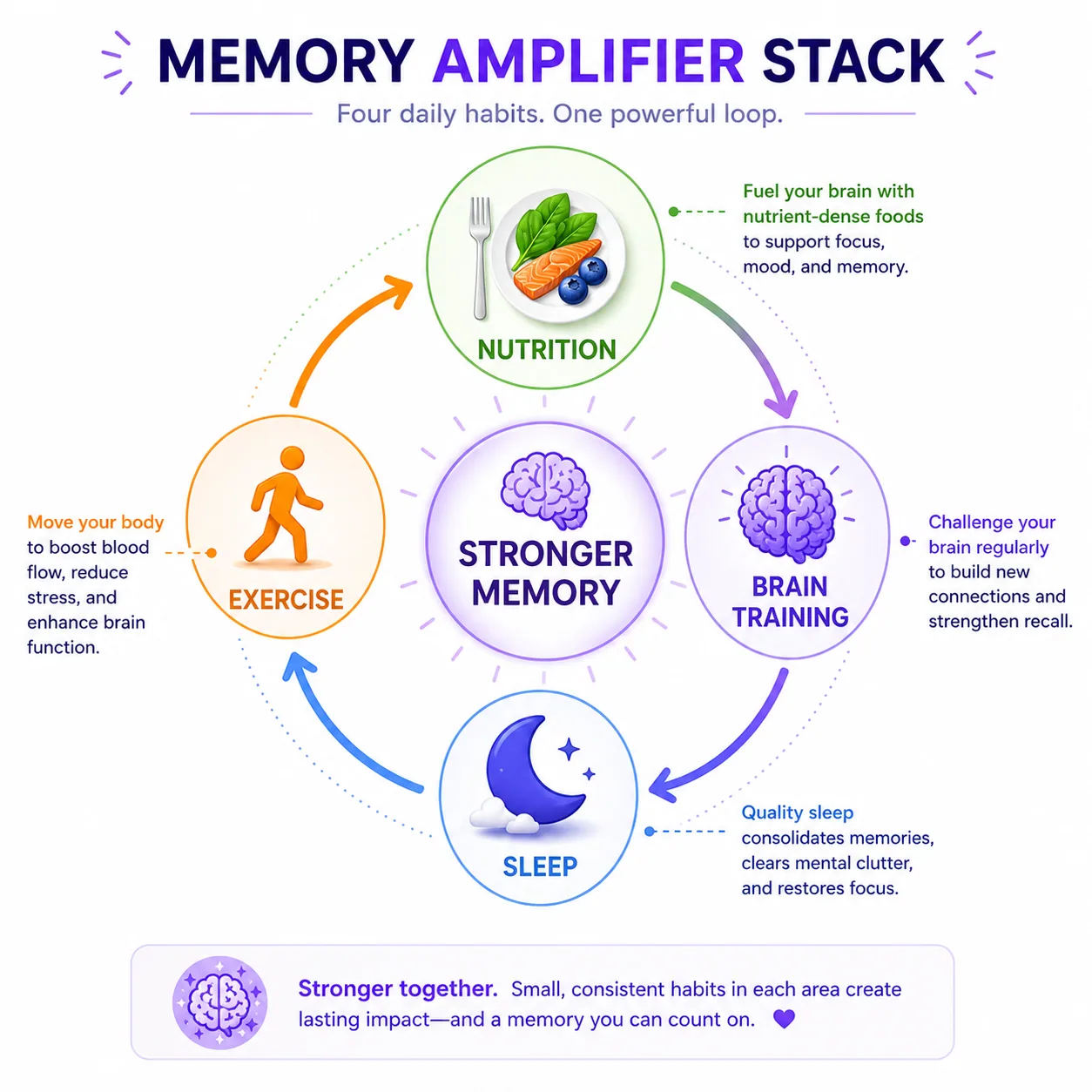
You don’t need to overhaul your entire diet tomorrow. Start with one swap: replace one processed snack with a handful of walnuts or blueberries. Cook one meal with olive oil instead of butter. Add spinach to something you already eat. Small, consistent changes compound over time, just like brain training does.
And if you want to pair better nutrition with targeted visual memory training, Blanked is free to try. Two minutes a day, a handful of blueberries, and a decent night’s sleep. That’s a brain health stack most people can manage.
Frequently asked questions
What is the single best food for memory?
Can diet alone prevent memory loss?
Does sugar really affect memory?
Is coffee good or bad for memory?
How quickly does diet affect brain function?
Train your memory. Play Blanked free.
A free visual memory game built around how memory actually works. 6 game modes, 400+ levels.
Download on the App Store