The Picture Superiority Effect: Why You Remember Images Better Than Words (2026)

On this page (5)
Here is a small experiment you can run on yourself. Think back to a book you read a few years ago. You can probably recall the gist, maybe a few phrases, but most of the actual sentences are gone. Now think back to a film you watched around the same time. The scenes, the faces, the places come back in far richer detail, even though you gave the film the same couple of hours you gave whole chapters of the book.
That gap is not a fluke of what you happened to pick. It is one of the most reliable findings in all of memory research: your brain remembers pictures far better than it remembers words. Psychologists call it the picture superiority effect, and once you understand why it happens, it changes how you think about learning, memory, and why some information sticks while other information slides straight off.
What the Picture Superiority Effect Is
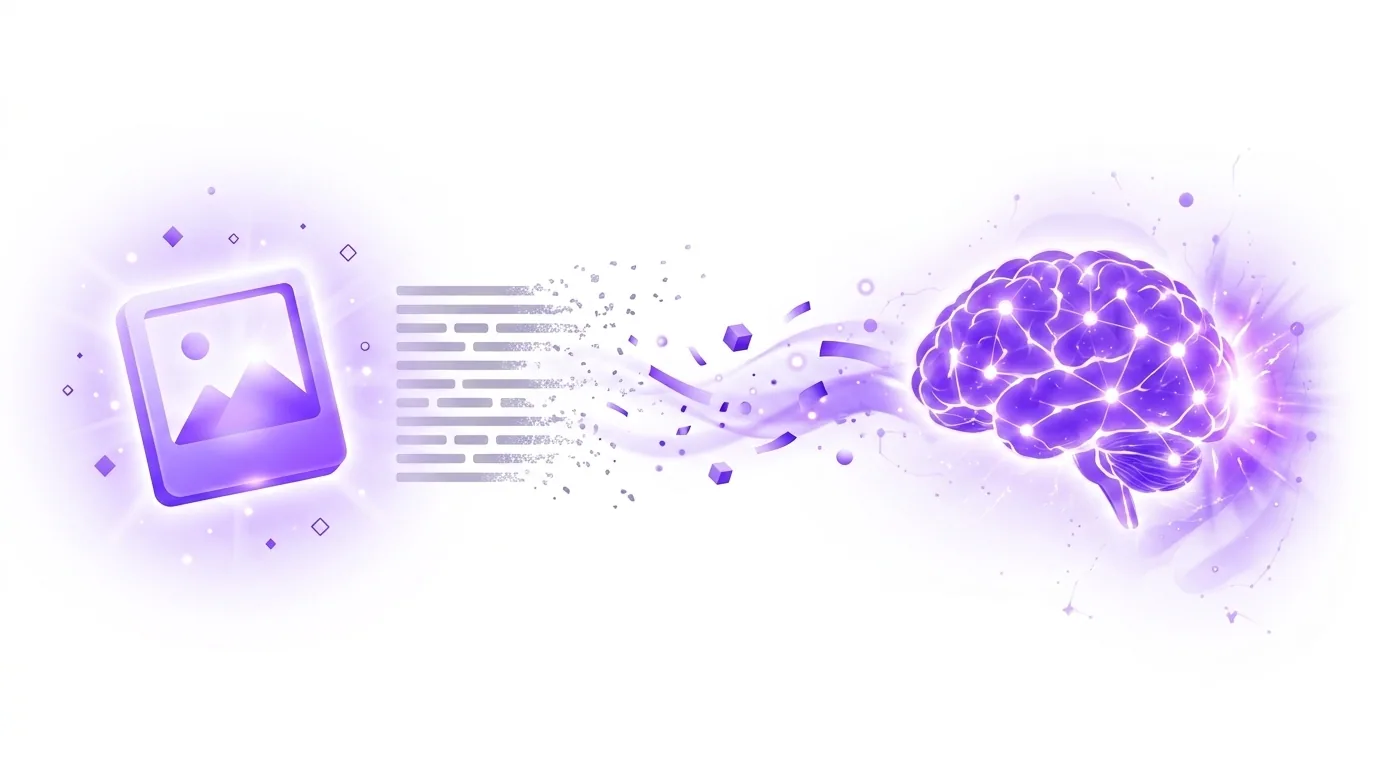
The picture superiority effect is the well-established finding that people remember images far more accurately, and for far longer, than they remember equivalent words. Show someone a picture of an apple and show someone else the written word "apple", test them later, and the person who saw the picture will reliably remember it better.
This is not a small or fragile effect. It shows up consistently across decades of experiments, different age groups, and different kinds of tests. It is one of the sturdiest results in the study of human memory, and its scale is genuinely surprising.
Your Visual Memory Is Almost Unbelievably Large
Just how good is your memory for images? In a famous 1970s study by the psychologist Lionel Standing, participants were shown thousands of pictures, one after another. Later they were tested to see how many they could recognise. People correctly identified images they had seen with striking accuracy even after viewing many thousands of them. Standing pushed the numbers to an extreme, showing participants on the order of ten thousand pictures, and recognition stayed remarkably high.
Nobody has that kind of capacity for words or sentences. You could not glance at ten thousand written phrases once and then reliably recognise them later. But for pictures, your brain does something close to it almost effortlessly. Your visual memory has an enormous, high-capacity storage system that your verbal memory simply cannot match.
Why Pictures Win: Two Codes Are Better Than One
So why is the brain so much better with images? The leading explanation is elegantly simple, and it comes from the psychologist Allan Paivio, who called it dual-coding theory.
The idea is that a picture gets stored in your memory twice, through two separate channels. When you see a picture of a dog, your brain encodes it visually, as an image, and it also almost automatically labels it, storing the verbal tag "dog" as well. You have laid down two independent memory traces, a visual one and a verbal one, and later you can reach the memory through either route. If one path fails, the other can still get you there.
A word, by contrast, usually gets stored only once. When you read the word "dog", you encode it verbally, but you do not reliably conjure up a mental picture to go with it. There is only one memory trace and one route back to it. So when memory is tested, the picture has two chances to be retrieved and the word has one. Two codes beat one, and pictures win.
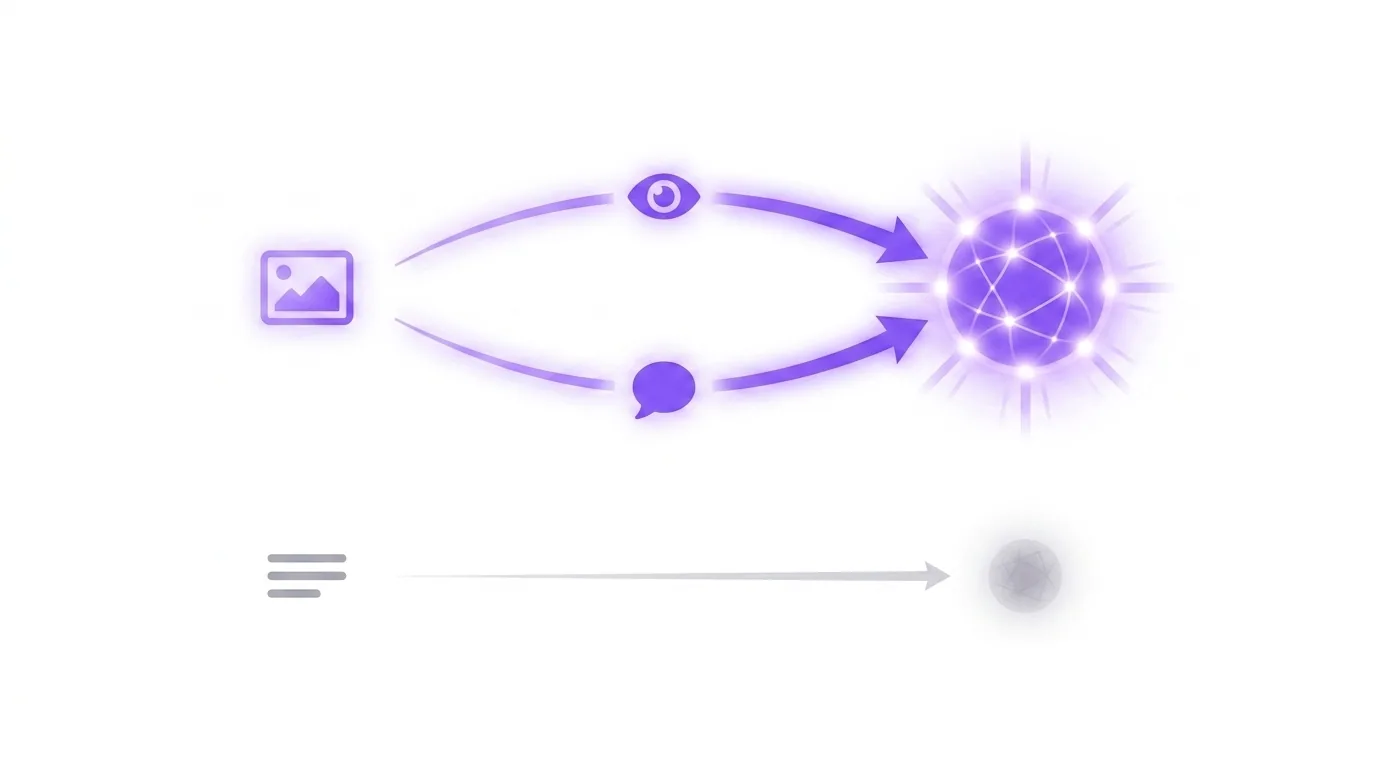
This also explains a related quirk: concrete words like "hammer" or "beach" are remembered better than abstract words like "justice" or "concept". Concrete words easily evoke a mental image, so they sneak into the dual-coding advantage, while abstract words stay stuck with a single verbal code.
This Is Why Memory Techniques Turn Everything Into Pictures
Once you know about the picture superiority effect, a lot of memory tricks that seem like arbitrary party games suddenly make perfect sense. Nearly all of them work by converting hard-to-remember verbal information into easy-to-remember images.
The most famous example is the memory palace, the technique used by memory champions to memorise decks of cards and long strings of numbers. Its entire method is to take abstract items and turn them into vivid mental pictures placed in imagined locations. It works precisely because it hijacks your enormous visual memory instead of relying on your weaker verbal memory. The same logic runs through visual mnemonics, diagrams, mind maps, and flashcards with images: they all take advantage of the fact that a picture is worth, quite literally, more than a thousand remembered words.
It is also why a good diagram in an article, a chart instead of a paragraph of statistics, or an infographic can lodge in your memory when the equivalent block of text would have evaporated. You are not lazy for remembering the picture and forgetting the prose. You are working exactly as designed.
How to Use the Picture Superiority Effect
You can put this to work deliberately, and the moves are straightforward.
Turn information into images when you want it to stick. If you need to remember something, do not just reread the words. Form a mental picture of it, the more vivid and specific the better. You are giving the memory a second, stronger route back.
Favour visual materials when you learn. Diagrams, charts, and illustrations are not just decoration. When you have a choice between a wall of text and a clear visual that captures the same idea, the visual will usually be remembered far better.
Pair words with pictures. The strongest combination is not a picture alone or a word alone, but both together, which is dual coding at full strength. A labelled diagram, a flashcard with an image and a word, a concept tied to a mental picture: these deliberately engage both channels at once.
Train the visual system that does the heavy lifting. Because so much of memory leans on your visual capacity, keeping that system sharp pays off across the board. Noticing, holding, and recalling visual detail is a trainable skill, and it is the exact skill the picture superiority effect shows your brain is built to use.
That last point is the practical heart of it. Your visual memory is the strongest, highest-capacity memory system you own, and like any capacity, it responds to being exercised. If reading this made you curious how sharp your visual recall actually is, our free visual memory test measures it in about two minutes, and a few focused minutes a day with a visual memory game trains the exact system the picture superiority effect proves your brain relies on most.
The book faded and the film stayed because your brain is, at its core, a visual machine. Give it pictures and it holds on. Give it only words and it lets most of them go. The more you learn to think in images, the more of what matters you will actually keep.
Frequently asked questions
What is the picture superiority effect?
Why do we remember images better than words?
How much better is visual memory than verbal memory?
How can I use the picture superiority effect to remember things?
Why are concrete words easier to remember than abstract words?
Train your memory. Play Blanked free.
A free visual memory game built around how memory actually works. 6 game modes, 400+ levels.
Download on the App Store