The Serial Position Effect: Why You Remember the First and Last Things but Forget the Middle (2026)


On this page (5)
Someone reads you a phone number, or a shopping list, or introduces you to a line of new colleagues one after another. A little later, you can picture the start clearly and the end clearly, but the middle is a blur. The first two names, the last two names, sharp. The three in between, gone, as if they were never said.
This is not carelessness, and it is not a sign your memory is slipping. It is one of the most predictable patterns in all of psychology, so reliable that researchers can draw it as a curve. It is called the serial position effect, and it says something simple and useful: where a piece of information sits in a sequence changes how likely you are to remember it. Understand the curve and you can stop losing the middle, and start putting the things that matter where your memory will actually catch them.
What the Serial Position Effect Is
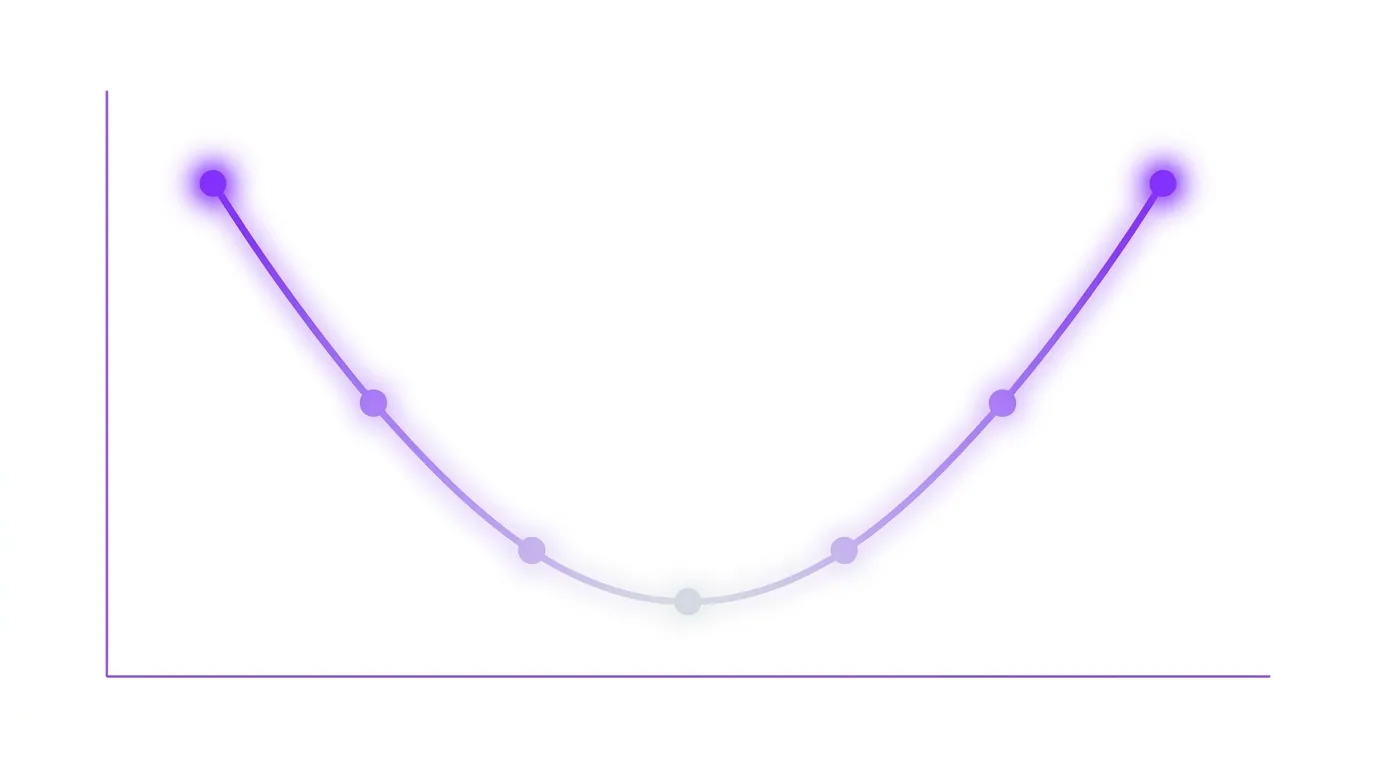
The serial position effect is the tendency to remember the items at the beginning and the end of a list better than the items in the middle. Plot how well people recall each position in a sequence and you get a distinctive U-shape: high at the start, dropping through the middle, rising again at the end.
That U-shape is made of two separate effects with two different causes, and pulling them apart is where it gets genuinely interesting, because each one reveals a different part of how memory works.
Primacy: Why the First Items Stick
The strong memory for the first few items is called the primacy effect. Its cause is rehearsal.
When a list begins, your mind has spare capacity, so you rehearse the opening items, repeating them to yourself, giving them attention. That rehearsal is exactly what moves information from fragile short-term memory into more durable long-term memory. The first items get the most rehearsal simply because they arrived when your mind was least crowded, so they are the ones most likely to be properly stored.
As the list goes on, more and more items compete for that same limited rehearsal capacity, and each new one gets less. By the middle, your mind is saturated, and the items are barely rehearsed at all. That is the bottom of the curve.
Recency: Why the Last Items Stick
The strong memory for the final few items is called the recency effect, and its cause is completely different. The last items are not remembered because they were rehearsed. They are remembered because they are still sitting in your short-term memory at the moment you try to recall.
Short-term memory holds a small amount of information for a brief window. When recall comes right after the list ends, the final items have not had time to fade yet, so you can simply read them straight off the top of your mind. They are fresh, not stored.
There is an elegant experiment that proves these are two genuinely different systems. In 1966, the psychologists Murray Glanzer and Anita Cunitz gave people lists and then had one group recall immediately and another group wait about thirty seconds, filling the gap with a distraction task like counting backwards. The delay and distraction wiped out the recency effect completely, the last items vanished, because short-term memory had been cleared. But the primacy effect was untouched: the first items, safely in long-term memory, survived just fine. Two effects, two memory stores, one clean demonstration.
Why the Middle Is Where Memories Go to Die
Now the middle makes sense. Those items get the worst of both worlds. They arrived too late to receive much rehearsal, so they never made it securely into long-term memory. And they arrived too early to still be sitting in short-term memory when recall comes, because later items pushed them out. They fall into the gap between the two systems, remembered by neither, and that is why the middle of any sequence is so reliably forgotten.
The effect is everywhere once you notice it. It is why you remember the first and last speakers at an event but not the ones in between, why the middle of a long to-do list is the part you forget, why the third of five people you are introduced to is the name that escapes you. None of it is a personal failing. It is the shape of the curve.
How to Use the Serial Position Effect
Because the effect is so predictable, you can work with it in both directions: protect yourself from it, and use it on other people's memory in the good sense.
Put what matters at the start or the end. If you are giving a presentation, writing an email, or making a case, lead with your most important point and close with it too. The middle is where things get lost, so never bury the one thing you need remembered in the middle of the message.
Give the middle extra help. When you are learning a sequence and the middle keeps slipping, that is the part to rehearse deliberately, rather than assuming it will stick on its own. You can also break a long list into smaller chunks, which effectively creates several new beginnings and endings, giving more items a favoured position.
Recall soon, or the recency advantage disappears. If you need the last items on a list, retrieve them quickly. The Glanzer and Cunitz result is a practical warning: even a short delay with any distraction empties short-term memory and takes the recency items with it.
Underneath all of this is a bigger point about your memory. The serial position effect is a direct window onto the two systems every one of your memories passes through: the short-term store that holds the present moment, and the long-term store that keeps what gets rehearsed into it. The middle of the list is lost precisely because it slips between them without enough attention to land in either.
That gap is exactly where deliberate attention and encoding make the difference, and those are trainable. If understanding the curve made you want to know how much your own short-term memory can actually hold, our free memory test measures it in about two minutes, and a few focused minutes a day with a memory game trains the attention and encoding that decide whether a piece of information lands in memory or falls into the middle and disappears.
The next time the middle of a list slips away from you, you will know it was never your fault. It was the curve. And now that you can see it, you can put the things that matter where your memory is waiting to catch them: right at the beginning, and right at the end.
Frequently asked questions
What is the serial position effect?
What is the difference between primacy and recency?
Why do I forget the middle of a list?
How can I use the serial position effect?
What did Glanzer and Cunitz prove about the serial position effect?
Train your memory. Play Blanked free.
A free visual memory game built around how memory actually works. 6 game modes, 400+ levels.
Download on the App Store