Why Does Time Go Faster as You Get Older? (2026)

On this page (5)
A summer holiday as a child lasted a geological age. Six weeks stretched out like a continent, and September felt impossibly far away. Now a whole year can pass in what feels like a long weekend. You blink and it is Christmas again, then you blink and it is Christmas again, and you find yourself saying the same thing everyone over thirty says: where did the time go?
You are not imagining it, and you are not simply getting boring. The steady acceleration of time as you age is one of the most universal human experiences, and it has real explanations rooted in psychology and, in particular, in how your memory works. The best part is that once you understand why it happens, you can genuinely slow it back down.
The Simple Math Explanation
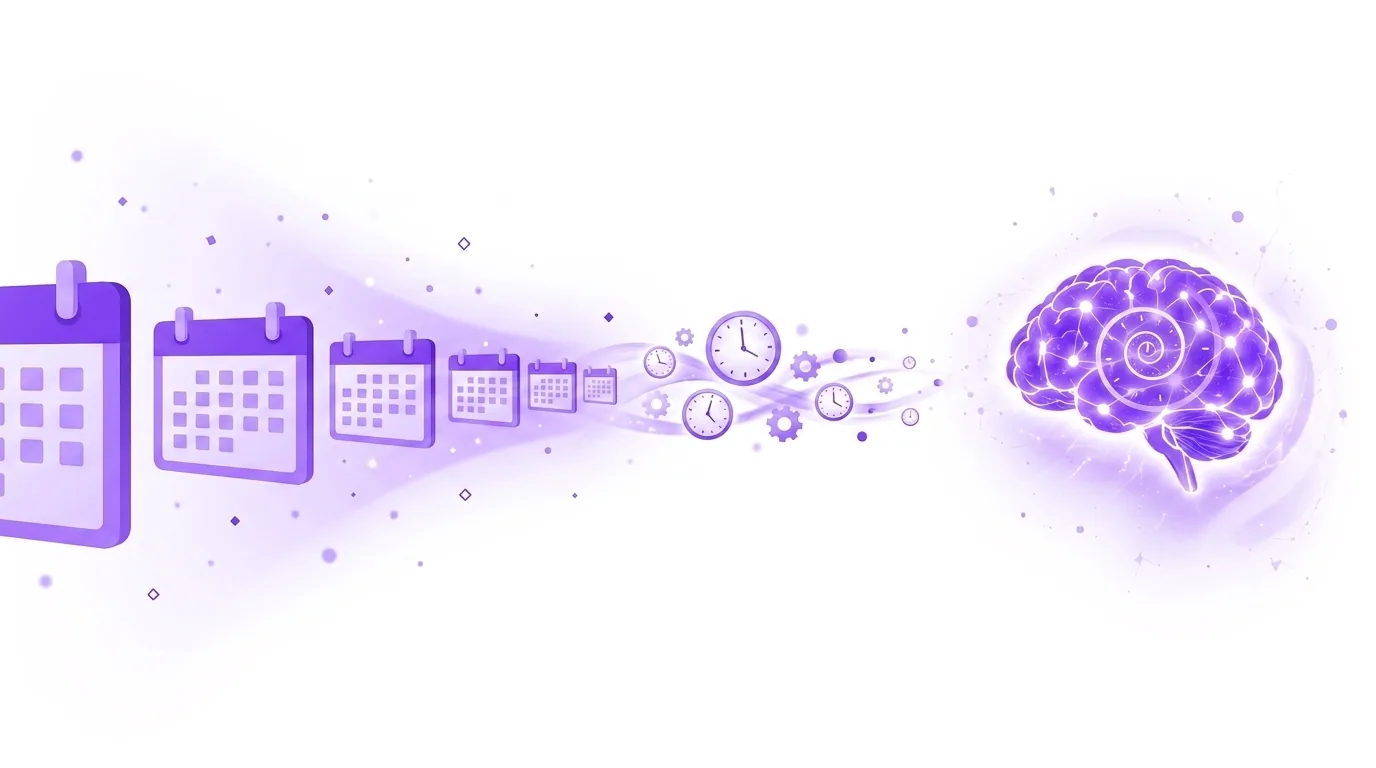
The oldest and most intuitive theory is just arithmetic. Back in 1897, the philosopher Paul Janet pointed out that we may judge a length of time against the total amount of time we have already lived.
To a five-year-old, one year is a fifth of their entire life, a vast, significant chunk. To a fifty-year-old, that same year is one fiftieth of their life, a thin sliver by comparison. If your brain measures a year as a proportion of everything you have experienced, then each successive year is a smaller fraction of the whole, so it feels shorter. On this view, the summers of childhood felt endless because they genuinely were an enormous slice of the small amount of life you had lived so far.
This proportional theory is elegant and almost certainly part of the answer. But it is not the whole story, because it cannot explain why a single dull week as an adult can drag while a packed one flies, or why the years feel fast in a way individual days sometimes do not. For that, you have to look at memory.
The Real Engine: How Memory Measures Time
Here is the crucial insight. When you judge how long a period of time felt, you are not consulting some internal stopwatch. You are looking backward and asking, in effect, how much happened, how many distinct memories did I lay down in that stretch?
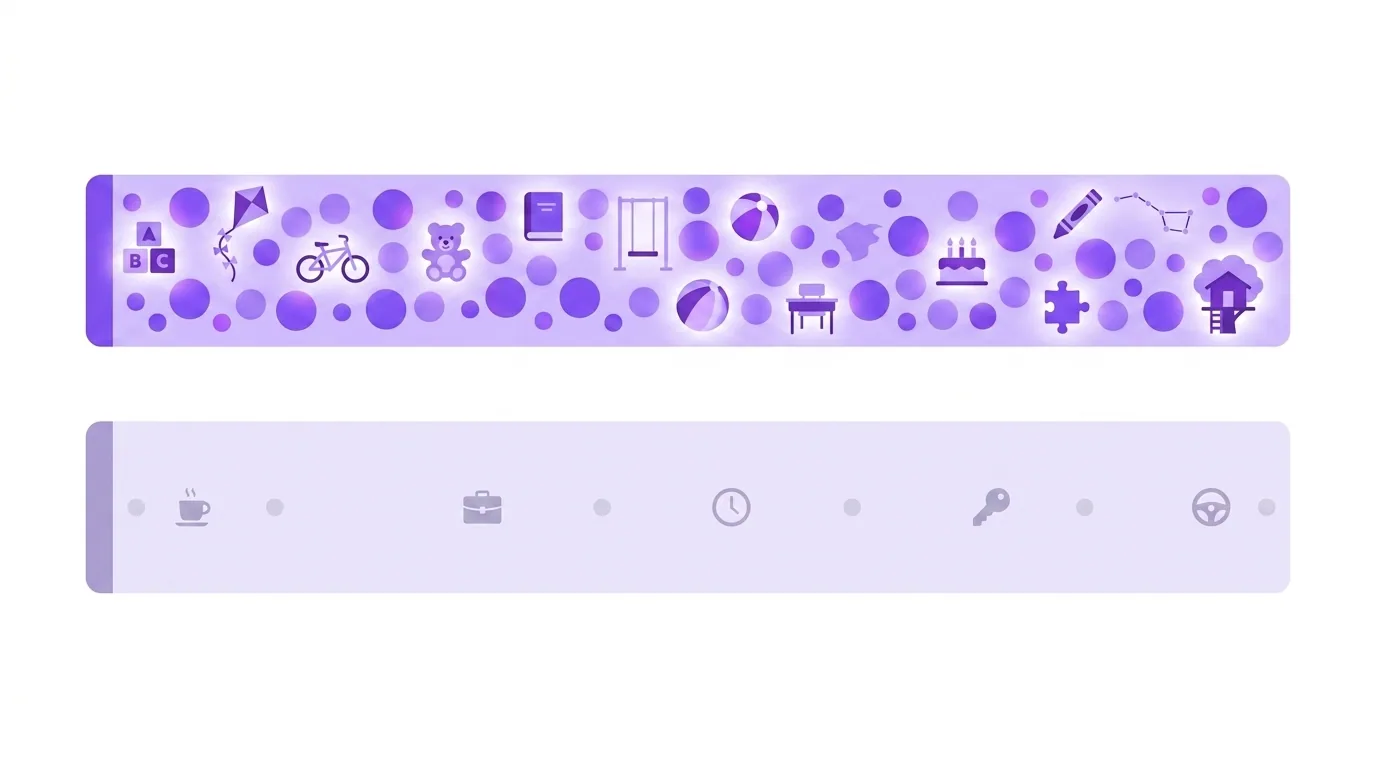
Your brain estimates the duration of a past period by the density of memories in it. A stretch of time crammed with new, distinct, vivid experiences reads as long in retrospect, because there is so much to look back on. A stretch of time that was routine and repetitive reads as short, because it left almost no separate memories behind. Two weeks can feel like a month or like a blink, depending entirely on how much your memory recorded.
This is why childhood felt so vast. When you are young, almost everything is new. First day of school, first bike, first time at the sea, first everything. Your brain is encoding novel experiences constantly, laying down dense, richly detailed long-term memories one after another. Look back on a childhood year and it is packed wall to wall with distinct memories, so it feels enormous.
Adulthood is the opposite. Life becomes routine: the same commute, the same job, the same faces, the same week repeated. Novelty drops off a cliff, and with it the number of new memories you encode. A routine adult year leaves behind far fewer distinct memory markers than a childhood one, so when you look back, there is very little there, and the year feels like it evaporated. It did not go faster. It just left a thinner trail.
The Holiday Paradox
There is a neat twist that proves memory is doing the work, and you have probably felt it yourself.
Think about a genuinely novel week: a holiday somewhere new, full of unfamiliar sights and experiences. While you are living it, packed with fresh input, the days can feel pleasantly full and even a little slow. But the strange thing happens afterward: looking back, that single week feels like it lasted ages, far longer than an ordinary week at home.
Now compare a routine week of work. It often feels quick while you are in it, and then in retrospect it has collapsed to almost nothing, because it left barely any distinct memories.
This is the holiday paradox: novel time feels full in the moment and long in memory, while routine time feels unremarkable in the moment and vanishes in memory. It is a direct demonstration that your sense of how long a period lasted is built from memories, not from any real clock. And it points straight at the cure.
Other Pieces of the Puzzle
Memory density and proportion are the main drivers, but a couple of other factors add to the effect.
One is the reminiscence bump: when older adults recall their lives, a disproportionate share of their strongest memories come from roughly ages fifteen to twenty-five. That window is dense with firsts (first love, leaving home, first job, forming an identity) so it stays vivid for decades, while the routine middle years blur together. Your most memory-rich era is front-loaded into youth, which reinforces the sense that the early years were somehow bigger.
Another is a physiological idea proposed by the engineer Adrian Bejan: that the rate at which we process images and information gradually slows with age, as the brain's neural networks grow larger and signals travel further. If you sample fewer mental frames per second, more external time passes between them, and clock time seems to slip by faster. This one is more speculative, and there is no scientific consensus on the exact mechanism, but it fits the overall picture.
The honest summary is that there is no single agreed cause. But the theories overwhelmingly point in the same practical direction, and it is a hopeful one.
How to Slow Time Back Down
If time speeds up because routine stops generating new memories, then the fix is to give your brain more to remember. You cannot change the arithmetic of proportion, but you have real control over memory density.
Seek novelty deliberately. New places, new skills, new people, new routes home. Novel experiences are encoded as distinct memories in a way routine never is, and a period full of them expands in retrospect. A year with a dozen genuinely new experiences will feel far longer, looking back, than a year of the same week repeated fifty times.
Break your routines. You do not need a world tour. Taking a different route, eating somewhere new, rearranging a room, doing an ordinary thing in an unfamiliar way all inject small hits of novelty that your memory actually records. Routine is the enemy of remembered time.
Pay full attention. Much of adult life passes on autopilot, and autopilot encodes almost nothing. Experiences you are genuinely present for, phone down, actually noticing, get laid down as real memories. Attention is the gateway to encoding, so being present is quite literally a way of making time last.
Keep learning. Novel, effortful mental activity creates the kind of distinct, engaged experiences that stick. The same principle that makes a holiday feel long makes a period of active learning feel substantial in memory.
There is a through-line in all of this: time perception is downstream of memory, and memory responds to attention, novelty, and engagement, all of which you can train. If reading this made you want to take better hold of your own memory, our free memory test is a two-minute way to see where your recall stands, and a few focused minutes a day with a memory game trains the attention and encoding that turn passing moments into memories that make time feel full.
Time is not actually accelerating. Your years are the same length they always were. What has thinned out is the trail of memories you leave through them, and that is something you can change. Fill your time with things worth remembering, and, looking back, you will find you had far more of it than you thought.
Frequently asked questions
Why does time go faster as you get older?
What is the holiday paradox?
Does time actually speed up as you age?
How can I make time feel slower?
Why did summers feel so long as a child?
Train your memory. Play Blanked free.
A free visual memory game built around how memory actually works. 6 game modes, 400+ levels.
Download on the App Store