How Does Muscle Memory Work? The Science (2026)

On this page (6)
You have not ridden a bike in fifteen years. You get on one anyway, wobble for half a second, and then your body just... does it. Balance, pedalling, steering, all of it, without a single conscious instruction. You could not explain how you do it if you tried, and yet you can do it perfectly.
That is muscle memory, and almost everyone has felt it: touch-typing without looking, playing a piece on an instrument your hands seem to know better than you do, catching something before you have consciously seen it fall. It feels like the skill is stored in your fingers or your legs. It is not. The name is one of the most misleading in all of biology, and understanding where muscle memory actually lives tells you something powerful about how skill, and memory itself, really works.
Muscle Memory Is Not in Your Muscles
Let us clear up the big misconception first. Your muscles do not remember anything. They have no capacity to store information; they are cables and motors that contract when told to. Every bit of the "memory" in muscle memory lives in your nervous system, in your brain and spinal cord.
What we call muscle memory is a specific type of memory that scientists call procedural memory: the memory for how to do things, for skills and sequences of movement. It sits in a different system from the memory you use to recall a fact or a face. When you remember a phone number you are using declarative memory, the kind covered in our guide to short-term and long-term memory. When your hands find the right keys without you thinking, that is procedural memory, and it runs on largely separate machinery.
The proof is dramatic. Patients with certain kinds of amnesia, who cannot form new conscious memories at all, can still learn brand-new physical skills through practice. They get measurably better at a task day after day while swearing, truthfully, that they have never done it before. Their skill memory works even though their fact memory is broken, which shows the two are genuinely different systems.
The Brain Regions That Actually Do the Work
Building a skill draws on a coordinated network of brain areas, each with a distinct job.
The motor cortex issues the commands, the outgoing instructions that ultimately move your muscles. The basal ganglia, a set of structures deep in the brain, handle the "what": which sequence of actions to run, chaining individual movements into a smooth automatic routine. The cerebellum, tucked at the back of the brain, handles the "when" and "how precisely": timing, coordination, and the fine error-correction that turns a clumsy attempt into a fluent one.
When you first attempt a skill, these regions are working hard and consciously, with a lot of moment-to-moment error correction. As you practise, the pattern of activity shifts. The cerebellum's error-correcting role quietens down because there are fewer errors to fix, while the automatic pathways through the basal ganglia strengthen. The skill moves from something your brain effortfully computes to something it simply runs.
What Practice Physically Changes
Every time you repeat a movement, the specific chain of neurons that produces it fires together. And neurons that fire together strengthen their connections, a principle at the heart of all learning. Repetition literally reshapes the circuit that controls the skill.
Two changes matter most. First, the synaptic connections along the skill's pathway get stronger and more reliable, so the signal passes more easily each time. Second, the pathway becomes insulated. Frequently-used nerve fibres get wrapped in a fatty sheath called myelin, which acts like insulation on a wire, letting the signal travel far faster and more cleanly. A well-practised skill runs on a faster, better-insulated, lower-resistance circuit than a new one. That physical upgrade is why the movement gets quicker, smoother, and less effortful the more you do it.
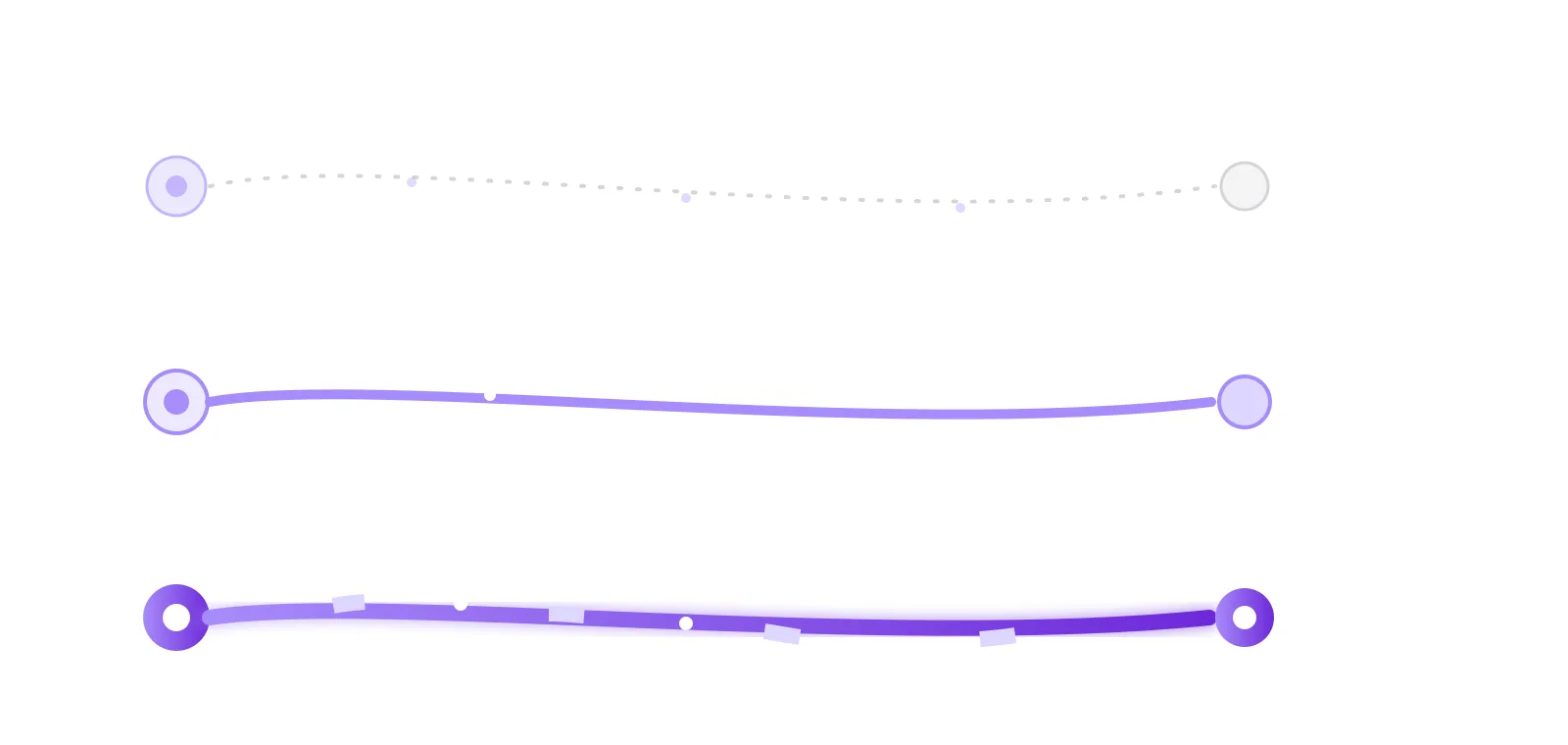
This is also why it feels automatic. Once the circuit is built, it can run largely below conscious awareness, freeing up your attention for other things. It is the same reason an experienced driver can hold a conversation while doing something that terrified them during their first lesson.
Why Skills Last So Long
Procedural memory is unusually durable. Declarative memories, names, facts, where you left your keys, fade readily. Skills, once genuinely learned, can survive years or decades of no practice, which is exactly why "it is like riding a bike" became the phrase for something you never forget.
The likely reason is a combination of how the skill was built and how it is stored. A skill is laid down through hundreds or thousands of repetitions, far more encoding than a fact ever gets, and it is stored in robust subcortical systems rather than the more fragile networks that hold conscious memories. Deeply myelinated, heavily rehearsed motor circuits are among the most permanent things your brain builds.
There is a flip side worth knowing: because the circuit is so durable, bad technique is genuinely hard to unlearn. Practising a movement wrong builds an automatic pathway for the wrong version, and you then have to build a competing correct pathway strong enough to override it. This is why coaches insist on good form from the start. You are not just learning a skill, you are permanently wiring one in.
The Other "Muscle Memory": A Real Thing in the Muscle
Confusingly, there is a second, completely different phenomenon that also gets called muscle memory, and this one really does live in the muscle.
In strength training, people notice that regaining lost muscle after a break is far faster than building it the first time. The current explanation is that when you train a muscle, its fibres gain extra nuclei (the control centres inside muscle cells), and those extra nuclei appear to persist even when the muscle shrinks from disuse. When you start training again, the muscle already has the cellular machinery in place to grow back quickly. This is a genuine physiological memory inside muscle tissue, and it is unrelated to the skill-based, brain-based muscle memory this article is mostly about. Same nickname, two entirely different mechanisms.
How to Build Muscle Memory Faster
Because skill memory follows the rules of the brain, you can practise in ways that build it more efficiently.
Practise correctly, from the beginning. Since repetition wires in whatever you actually do, slow, accurate repetitions beat fast sloppy ones. You are carving a pathway; carve the right one.
Space your practice. Several shorter sessions across days build more durable skill than one long cram, because the consolidation that locks a skill in happens between sessions, especially during sleep. This is the same spacing principle that governs how sleep affects all memory.
Focus fully while learning. Attention drives encoding. Skills learned with full concentration wire in faster and cleaner than those drilled on autopilot, at least until they become automatic.
Repeat, then repeat more. There is no shortcut around volume. The pathway strengthens and insulates with use, so consistent repetition over time is the actual mechanism of mastery.
Muscle memory is one of the clearest demonstrations of a truth that runs through everything your brain does: memory is physical, it is built by repetition, and what you practise, you become. The skill in your fingers was never in your fingers. It is a pathway you built, one repetition at a time, in the most trainable organ you own. If that idea makes you want to put your own brain through its paces, our free memory test is a quick place to start, and a few focused minutes a day with a memory game trains the attention and encoding that every kind of memory, skill included, is built from.
Frequently asked questions
How does muscle memory work?
Is muscle memory stored in your muscles?
Why do you never forget how to ride a bike?
Is muscle memory in weightlifting real?
How can I build muscle memory faster?
Train your memory. Play Blanked free.
A free visual memory game built around how memory actually works. 6 game modes, 400+ levels.
Download on the App Store