Blanked vs Elevate: Which App Is Better? (2026)

On this page (10)
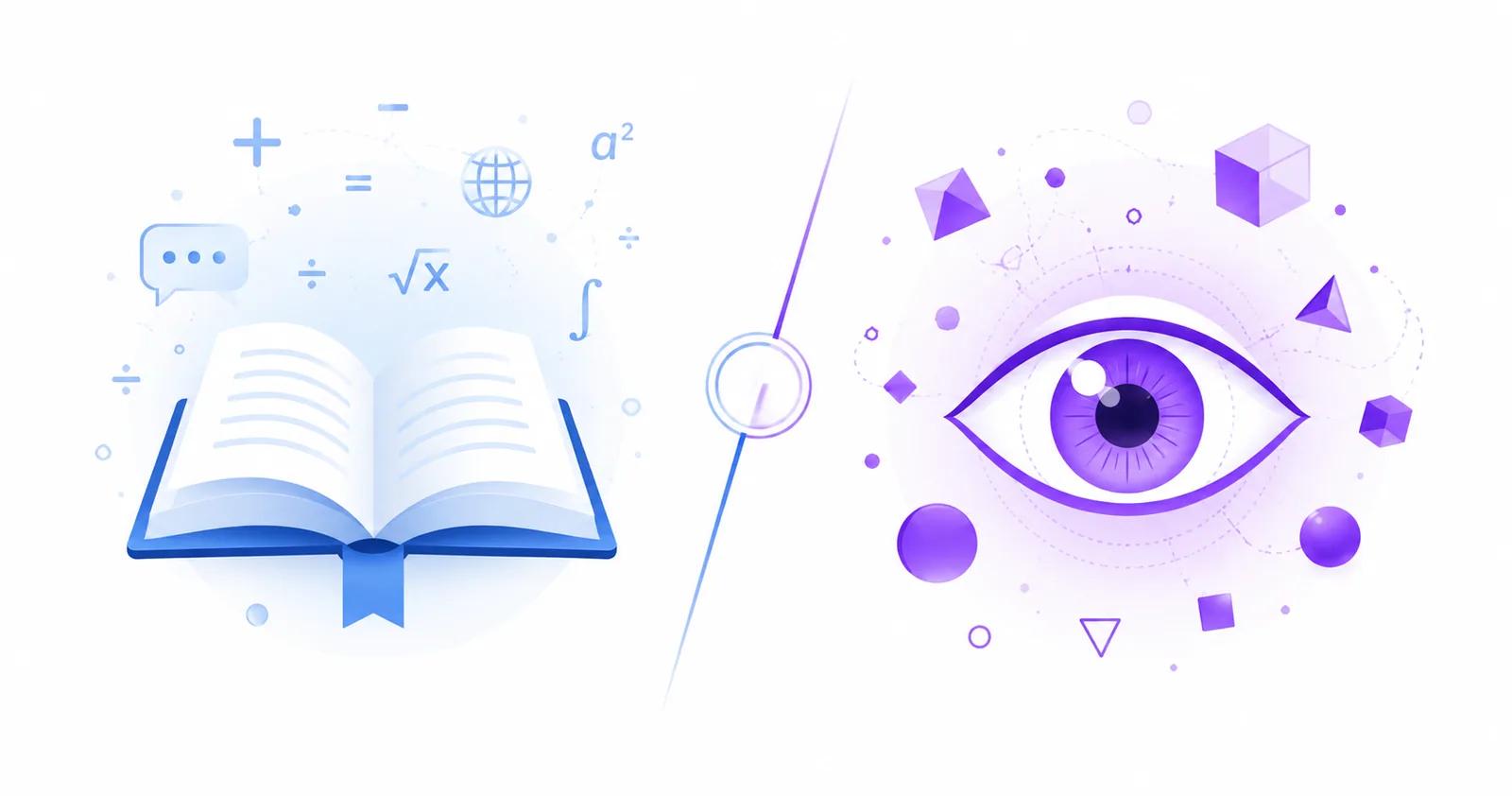
Blanked and Elevate are both brain training apps, but comparing them is a bit like comparing a rowing machine to a treadmill. They’re both exercise. They both make you stronger. But they train completely different systems, and the right choice depends entirely on what you want to improve.
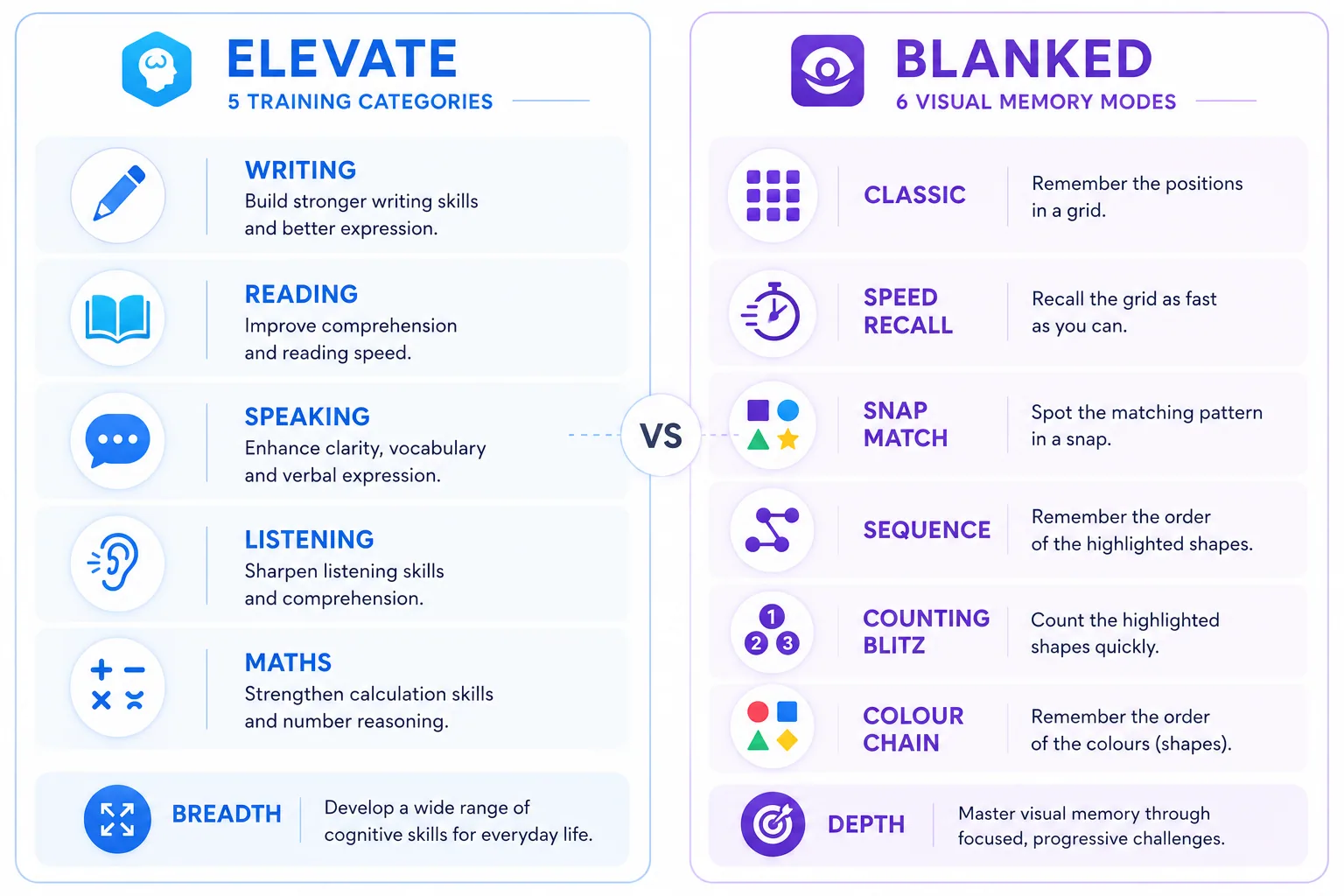
Elevate focuses on language, maths, and communication skills: vocabulary, reading comprehension, grammar, mental arithmetic, and speaking clarity. Blanked focuses exclusively on visual memory: encoding visual scenes, holding them in working memory, and recalling them from scratch.
This comparison breaks down the differences honestly so you can decide which one fits your goals. We’ll cover what each app trains, how they feel to use, the science behind each approach, and the pricing. No spin, no sales pitch, just an honest breakdown.
What Each App Actually Trains
Elevate
Elevate offers over 40 games across five main categories: writing, reading, speaking, listening, and maths. The exercises are designed to improve practical, real-world skills. A writing game might ask you to make a sentence more concise. A maths game challenges your mental arithmetic speed. A speaking exercise practises pronunciation or word choice.
The key insight about Elevate is that it trains the same skills you use in daily professional and academic life. Practising concise writing in the app translates directly to writing better emails. Mental maths practice helps you estimate figures faster. This practical focus is why CNET described Elevate as coming out ahead in the brain training app category and why it won Apple’s App of the Year.
Blanked
Blanked takes a fundamentally different approach. Instead of covering many cognitive domains broadly, it focuses deeply on one: visual memory. Six game modes (Classic, Speed Recall, Snap Match, Sequence, Counting Blitz, and Colour Chain) target different facets of visual memory processing. You study a scene of colourful shapes, the scene vanishes, and you answer questions from memory.
This narrow focus is deliberate. Research shows that targeted training on a specific cognitive skill produces stronger improvements in that skill than broad, multi-domain training. Blanked is designed for depth over breadth: strengthening the encode-store-retrieve cycle that underpins visual recall. (For a full explanation of what each mode trains, see our beginner’s guide.)
Game Design and Experience
Elevate feels like a polished educational tool. The games are clean, minimal, and professional. They feel more like skill-building exercises than entertainment, which some users love and others find dry. Sessions typically take 5 to 10 minutes and involve 3 games per day (free tier) or unlimited games (premium). The difficulty adapts based on your performance, and there’s a calendar view showing your training consistency.
Blanked feels more like a game. The visual scenes are colourful and varied, and Blink (the app’s mascot) reacts to your performance with expressions and animations. Sessions take about 2 minutes, which is deliberately short to remove the “I don’t have time” barrier that kills training habits. The streak system, streak shields, and milestone cosmetics add a motivational layer that keeps you coming back. (We wrote about the neuroscience behind this in our post on how streaks train your brain.)
The experiential difference is real. Elevate is the app you use because it’s good for you. Blanked is the app you use because it’s good for you and you don’t want to break your streak. Both approaches have value, but they appeal to different types of users.
The Science Question
This is where the comparison gets interesting. Both apps use adaptive difficulty, which is the most important design feature for effective brain training. When a task gets harder as you improve, your brain is constantly working at the edge of its ability, which is where neuroplastic change actually happens. Static difficulty doesn’t produce the same results.
Elevate’s scientific backing includes a 2021 internal study (company-funded, not independently replicated) that found users who trained 3 to 4 times per week showed 69% improvement in relevant skills. The study has limitations: it was funded by Elevate and hasn’t been independently validated. However, Elevate’s approach has a structural advantage on the transfer problem: because the skills it trains (writing, maths, vocabulary) are the same skills you use in daily life, the transfer gap is inherently smaller.
Blanked’s approach is grounded in the broader cognitive training research base. Visual memory training has been shown to improve visual processing speed and working memory within 2 to 4 weeks of consistent daily practice. The mechanisms are well-documented: long-term potentiation strengthens the neural pathways involved in encoding and retrieving visual information. The McGill University study showed that brain training can increase acetylcholine production after 10 weeks. (Full evidence breakdown in our post on whether brain training actually works.)
Neither app has the depth of clinical evidence that BrainHQ has (300+ peer-reviewed studies). But both use evidence-backed principles: adaptive difficulty, active recall, and progressive challenge.
The honest assessment is this: if you care about the transfer debate (whether training improvements carry over to daily life), Elevate has a structural advantage because it trains real-world skills directly. If you care about the underlying neuroscience of memory formation (long-term potentiation, hippocampal activation, neuroplastic change), Blanked’s approach aligns more closely with the mechanisms studied in the ACTIVE Trial, McGill, and NYU research. Both are valid approaches. They just solve different problems. (For the full science overview, see our post on what happens to your brain when you play memory games.)
Data Tracking and Progress
Elevate provides a performance calendar, skill-level tracking across categories, and progress graphs showing improvement over time. It’s detailed enough to see which specific skills (grammar, arithmetic, comprehension) you’re strongest and weakest in. The data presentation is clean and professional.
Blanked tracks your streaks, scores, levels completed, and overall progress across all six game modes. The Memory Analytics screen (available with Blanked+) gives you detailed stats on your visual memory performance: accuracy, speed, and trends over time. The data is focused entirely on visual memory rather than spread across multiple domains.
If you want to see granular data across many cognitive skills, Elevate’s tracking is broader. If you want deep, focused data on one cognitive skill (visual memory), Blanked’s tracking is more detailed in that specific area.
Pricing Comparison
Elevate Free: 3 games per day. Decent free tier. You get a meaningful daily training session without paying.
Elevate Pro: Roughly £49.99/year (pricing varies by region). Unlocks all 40+ games, unlimited daily sessions, and detailed performance tracking.
Blanked Free: Full access to all 6 game modes, 400+ levels, streak system, and daily play. No game content is locked behind the paywall.
Blanked+: £29.99/year. Adds Memory Analytics (detailed stats), cosmetics for Blink, streak shields, and an ad-free experience. But the core training is entirely free.
This is one of the sharpest differences. Elevate’s free tier is good but limited to 3 games per day. Blanked’s free tier gives you full access to every game mode and level. If budget matters, Blanked offers more training for free.
Where Elevate Wins
Breadth of training. If you want one app that covers language, maths, reading, writing, and listening, Elevate is hard to beat. The variety means you’re exercising multiple cognitive domains in every session.
Professional skill development. Elevate’s exercises directly mirror workplace skills. If you write emails, give presentations, estimate figures, or need to read faster, Elevate trains the exact skills you’re using. The transfer to real life is immediate and obvious.
Language and maths focus. No other mainstream brain training app trains language skills (grammar, vocabulary, writing clarity) as effectively as Elevate. If those are your weaknesses, Elevate is the clear choice.
Content volume. 40+ games across multiple categories means significant variety. You’re unlikely to get bored within the first year.
Where Blanked Wins
Visual memory depth. If your goal is specifically to improve visual recall (faces, places, details, spatial awareness), Blanked trains this skill with more depth than any other consumer app. Six dedicated modes targeting different facets of visual memory versus Elevate’s broader but shallower coverage.
Session length. 2 minutes versus 5 to 10 minutes. Blanked is designed for people who want effective daily training without a significant time commitment. Research shows that consistency matters more than session length, and Blanked removes the biggest barrier to consistency: time.
Free tier value. All game content is free. Every mode, every level, the streak system, Blink. Blanked+ adds stats and cosmetics, but the training itself costs nothing. Elevate limits free users to 3 games per day.
Habit design. The streak system, Blink mascot, streak shields, and milestone rewards create a stronger habit loop than Elevate’s calendar view. If your biggest challenge is showing up every day, Blanked’s design is built specifically to solve that problem.
Pricing. If you do upgrade, Blanked+ at £19.99/year is less than half the cost of Elevate Pro.
Which One Should You Choose?
Choose Elevate if: You want to improve language skills (vocabulary, grammar, writing clarity), maths ability, or reading comprehension. If your day involves writing emails, giving presentations, or working with numbers, Elevate trains the exact skills you need. It’s the better choice for professional skill development.
Choose Blanked if: You want to sharpen your visual memory: remembering faces, navigating environments, recalling visual details, processing spatial information. If your biggest problem is forgetting where you put things, not recognising people, or losing visual details, Blanked targets that skill directly. It’s also the better choice if you want maximum training for minimum time and cost.
Use both if: They train completely different skills. Using Blanked for 2 minutes in the morning and Elevate for 5 minutes later in the day gives you visual memory depth plus language and maths breadth. There’s no overlap, so they complement each other rather than compete. This is actually the approach the research supports most strongly: training multiple cognitive domains through different targeted exercises rather than relying on one app to do everything.
For a broader comparison of the brain training app landscape, see our best brain training apps 2026 roundup, or check our comparisons with Lumosity and Peak. You can also see the quick-reference version on our Blanked vs Elevate comparison page.
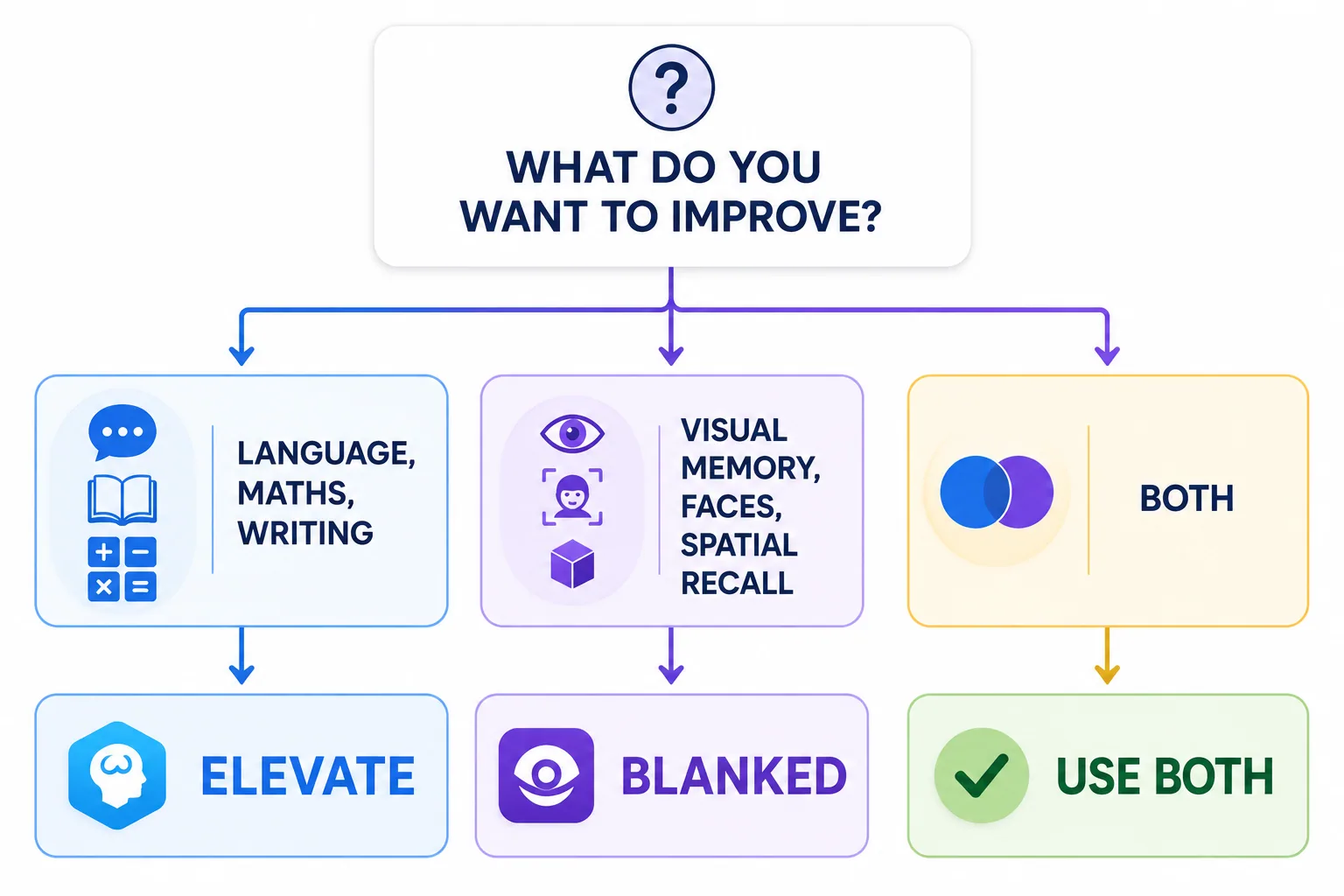
Both apps are good at what they do. The question isn’t which one is better. It’s which skill you want to train. If it’s visual memory, download Blanked for free and try it for a week. If it’s language and maths, try Elevate. If you’re not sure, start with the free versions of both and see which one you actually stick with. That’s the one that’ll produce results.
Frequently asked questions
Is Blanked or Elevate better for memory?
Can I use Blanked and Elevate together?
Is Elevate free?
Which app has better scientific evidence?
Is Elevate worth the subscription?
Train your memory. Play Blanked free.
A free visual memory game built around how memory actually works. 6 game modes, 400+ levels.
Download on the App Store